

Is that hairline crack a simple cosmetic blemish, or is it a silent signal that your home's structural envelope has been breached? Determining when to repair vs replace stucco depends entirely on the health of the substrate; if the lath is sound, repair is a virtue, but if the envelope is breached, replacement is the only honest solution. You want to protect your home's integrity without overspending on unnecessary renovations.
We understand that homeowners in Fullerton and Anaheim value both the aesthetic of their property and the technical honesty of the craftsmen they hire. This guide provides a clear diagnostic framework to help you make an informed decision based on the 2026 California Building Standards Code. You'll learn how to identify when a simple patch will suffice and when your home requires a full restoration to prevent hidden rot.
We'll walk through the "20% Rule" and explain how to spot the signs of moisture damage that mandates a fresh start. You'll also find accurate expectations for modern technical standards and how to achieve a seamless visual result. This methodical approach ensures you make a choice rooted in both long-term value and professional excellence.
Key Takeaways
- Apply the 20% Rule to evaluate if your damage is localized or if a full restoration is the most cost-effective path forward.
- Save money by identifying an intact moisture barrier, which allows you to focus on high-quality patches rather than a complete tear-down.
- Learn the critical warning signs for when to repair vs replace stucco, including lath corrosion and systemic moisture failure behind the surface.
- Protect your home's value in Fullerton and Anaheim by understanding how local seismic activity and salt air impact the longevity of your exterior.
- Ensure a seamless visual result by matching textures and preventing the unsightly "scarring" often left by inexperienced patching.
Evaluating Stucco Damage: The 20% Rule and Initial Assessment
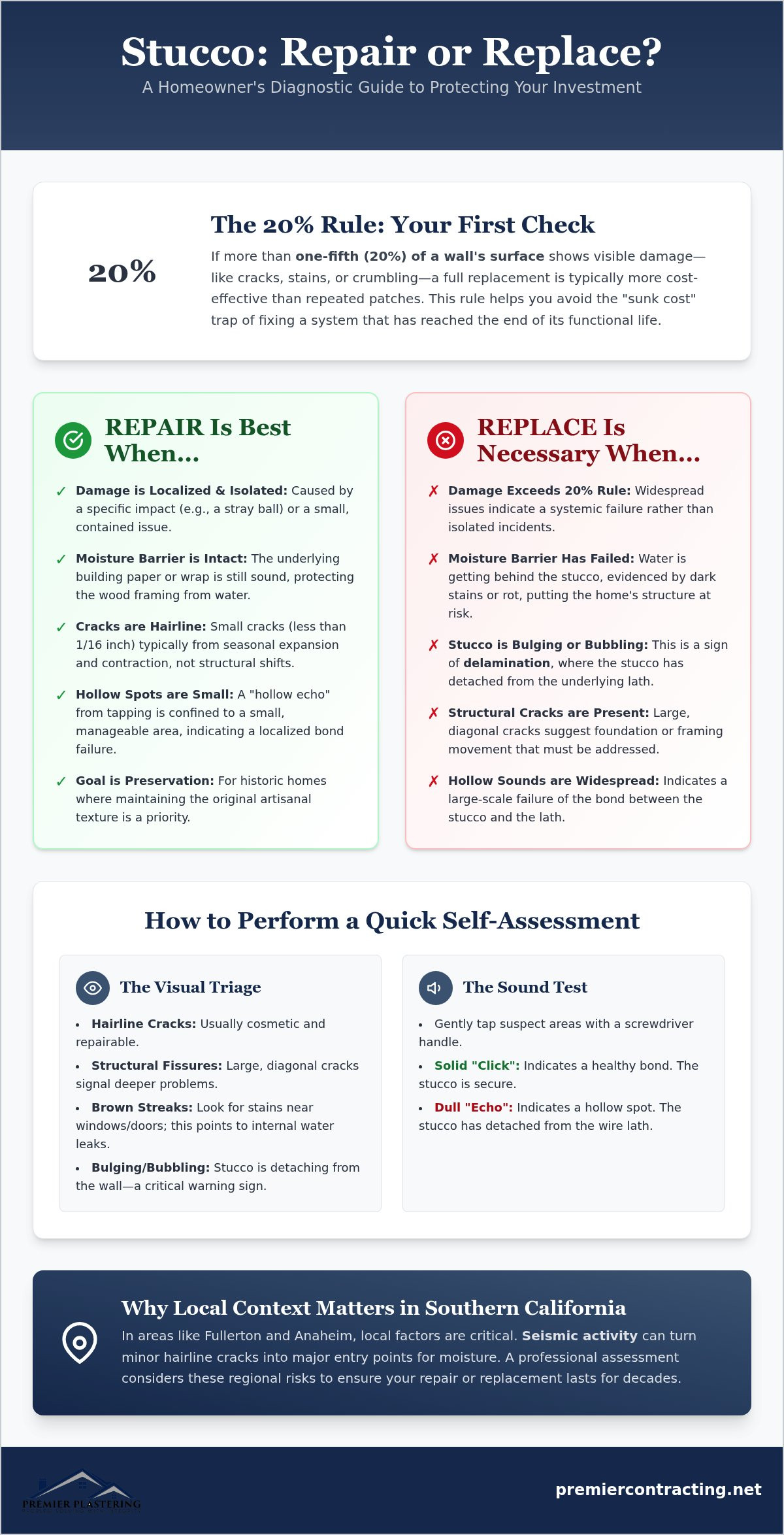
Deciding when to repair vs replace stucco begins with a simple mathematical threshold known as the 20% Rule. If more than one-fifth of your total wall surface shows visible damage, a full replacement usually offers better long-term value than a series of expensive patches. This rule helps homeowners avoid the "sunk cost" trap of repeatedly fixing a failing system that has reached the end of its functional life.
Perform an active assessment by walking your home's perimeter during different lighting conditions. Document every anomaly you see, from tiny gaps to large flakes. Understanding What is Stucco and how it functions as a protective shell is the first step toward maintaining your home's structural integrity.
Surface-level cosmetic issues, like small chips or minor fading, rarely threaten the house framing. However, systemic envelope failure means water has reached the wood studs or sheathing. These deeper issues turn a simple maintenance task into a critical structural necessity that requires a principled approach to restoration.
The Visual Triage: Cracks, Stains, and Bulges
Hairline cracks often result from seasonal temperature shifts and are generally minor. Structural fissures, however, suggest your foundation or framing is moving. Even if you aren't located in Texas, you can learn more about Crown Leveling Inc. to understand the impact of slab health on a home's structural integrity. In cities like Fullerton and Yorba Linda, local seismic shifts can turn these gaps into major entry points for moisture if you don't address them quickly.
Look for brown streaks or dark water staining around window corners and door frames. These stains often signify that your internal moisture barrier has failed or was installed incorrectly. If you see "bubbling" or "bulging" stucco, the material is likely undergoing delamination and has pulled away from the metal support mesh.
Grab a screwdriver handle or a small rubber mallet and gently tap areas of concern. A solid, sharp "click" means the bond between the plaster and the wall is healthy. If you hear a dull, hollow echo, the stucco has detached from the wire lath underneath.
Localized hollow spots are prime candidates for stucco crack repair. However, if the hollow sound persists across large sections of a single wall, the entire system is likely compromised. A principled master craftsman will always prioritize the health of the substrate over a quick cosmetic fix that hides underlying rot.
Signs That Stucco Repair is Your Best Move
Repairing your stucco is often the most ethical and cost-effective path when the damage is isolated. If your home's moisture barrier remains intact, a full replacement is usually an unnecessary expense. Choosing when to repair vs replace stucco involves looking past the surface to ensure the underlying paper or wrap still protects your framing.
For historic residences in Fullerton or Anaheim, localized repairs preserve the original architectural soul of the building. You don't need to strip away decades of history just to fix a few blemishes. Localized repairs allow us to maintain the artisanal textures that define these neighborhoods while keeping costs manageable.
Hairline crack mitigation serves as your primary defense against future structural issues. By sealing these minor gaps early, you prevent water from reaching the substrate and causing the metal lath to rust. This proactive maintenance extends the life of your exterior by decades.
Localized Impact and Hole Repair
We often see damage from stray basketballs, woodpeckers, or recently relocated dryer vents. For these specific issues, we utilize the "cut-back" method during stucco patching Fullerton projects. This involves removing a square foot of healthy material around the hole to ensure the new patch bonds securely with the existing substrate.
Texture matching is where the master craftsman's skill truly shines. Without meticulous attention to the original finish, your home ends up with a "leopard spot" look that devalues the property. We carefully replicate the dash, lace, or sand finish of your specific wall to ensure the repair is invisible to the naked eye.
Managing Small-Scale Water Damage
We follow a strict "source-first" rule: never apply a patch until you fix the leak. If water entered through a failed window seal or a cracked chimney cap, you must seal that entry point first. Once dry, we apply anti-microbial primers to the substrate to prevent future mold growth behind the new finish.
For topcoats that have suffered from years of intense Southern California sun, we use specialized stucco peeling repair techniques. This process removes the flaking layers without disturbing the structural base coats. If you aren't sure if your damage qualifies for a simple fix, consulting with a principled stucco professional can provide the clarity you need.
Critical Indicators for Full Stucco Replacement
Determining when to repair vs replace stucco becomes a matter of safety when systemic moisture failure occurs. If water bypasses your window flashing and reaches the structural studs, a simple patch acts as a temporary bandage on a deep wound. You must address the underlying rot to preserve your home’s skeletal integrity and prevent costly framing repairs later.
Wire lath corrosion serves as the most definitive sign that your stucco system has reached its end. Once the metal mesh begins to rust, it loses the mechanical bond required to hold the heavy plaster in place. This corrosion often remains hidden behind the surface until large sections of the wall begin to bow or pull away from the house.
Multiple previous patches also compromise your home’s curb appeal and overall market value. A "quilted" facade with mismatched textures and colors signals to future buyers that the home has suffered from deferred maintenance. A clean, unified restoration provides a fresh start and ensures your property maintains its premium status in the neighborhood.
Substrate Failure and Structural Rot
Rusting lath expands in volume because iron oxide occupies more space than the original steel. This internal pressure physically pushes the stucco layers outward, causing massive "sheets" of material to delaminate. You'll notice these areas feel spongy or move when you apply light pressure to the wall surface.
In humid coastal areas or shaded parts of Fullerton, this moisture trap encourages black mold growth behind the stucco layer. This organic growth feeds on the paper backing and wood sheathing, eventually compromising the air quality inside your home. Replacing the entire system allows us to strip away these hazards and install a modern, high-performance weather barrier.
The Life Cycle of Stucco Systems
Every home exterior has a finite lifespan despite the legendary durability of Portland cement. Our how long does stucco last analysis shows that 50 years is the typical limit for traditional systems. After half a century, the material often becomes too brittle to withstand the natural expansion and contraction of the seasons.
Traditional 3-coat systems also face unique challenges from decades of seismic shifting in Southern California. These micro-movements fatigue the bond between the brown coat and the finish coat over time. Choosing a full exterior stucco restoration ensures your home meets current 2026 building codes for seismic resilience and moisture management.
Cost and ROI: Repairing Patches vs. Full Restoration
Choosing when to repair vs replace stucco involves balancing immediate cash flow against the long-term value of your home. Minor repairs offer significant short-term savings by addressing localized issues before they spread. However, a failing system eventually demands a full restoration to stop structural decay and protect your equity.
Industry data indicates that a full stucco replacement project yields an average ROI of 70-75%. This investment recoups a large portion of its cost by increasing the property's market value and curb appeal. You aren't just spending money on plaster; you're reinvesting in the skeletal health of your primary asset. Protecting your home's equity also requires maintaining other key structural elements like the roof; for advice on how roofing health relates to home insurance, resources such as clerouxroofing.com provide helpful guidance.
In cities like Fullerton or Yorba Linda, major exterior work often requires specific permits to ensure compliance with the 2025 California Building Standards Code. These regulations mandate updated weather-resistive barriers that improve your home’s energy efficiency. A principled contractor will help you navigate these local requirements to ensure your restoration meets every modern safety standard.
A "patchwork" facade creates visible scars that distract from the architectural beauty of your residence. High-quality residential stucco repair utilizes modern color-matching technology to blend new material with the old finish. This meticulous process ensures that small fixes remain invisible to the naked eye.
If the damage is too widespread for a simple patch, a full re-dash or replacement provides a uniform finish. This artisanal approach removes the "quilted" look of previous repairs and restores the home’s original character. A clean, unified exterior signals to future buyers that the property has received expert care rather than deferred maintenance.
Long-Term Maintenance Savings
Neglecting a minor repair today often leads to a major replacement just a few years later. Water that enters through unsealed cracks eventually rots the wood framing and compromises the weep screed. This foundational metal strip must remain clear to allow moisture to escape from behind the stucco wall.
Modern synthetic stucco systems provide continuous insulation that creates a "thermal break" for your home. This technology can offset the initial investment through energy savings within 7 to 12 years. By upgrading your weather barrier during a full restoration, you lower monthly utility bills while eliminating the need for frequent patching.
| Feature | Stucco Repair | Full Replacement |
|---|---|---|
| Initial Cost | Lower / Moderate | Significant Investment |
| Project Duration | 1 to 3 Days | 1 to 2 Weeks |
| Expected Lifespan | 5 to 10 Years (Localized) | 50+ Years (System-wide) |
| Visual Result | Blended Patches | Uniform, New Finish |
If you need an honest assessment of your home's exterior health, contact a principled master craftsman to discuss the best path forward for your property.
Professional Assessment: Why Local Context Matters in Southern California
Orange County homes face unique environmental stressors that dictate when to repair vs replace stucco. Brittle traditional plaster doesn't handle the constant seismic micro-movements in Fullerton well. These subtle tremors create stress fractures that allow moisture to seep behind the finish and rot your framing over time.
If you live near Huntington Beach, coastal salt air presents a different technical challenge. Salt accelerates the corrosion of the metal wire lath; this process turns a minor surface crack into a system-wide failure. A principled master craftsman looks beyond the surface to see how these local forces impact your home's structural longevity.
Corey and the team at Premier Plastering prioritize honest diagnostics over high-ticket sales. We believe in doing the right thing even when no one is watching. This means we'll recommend a targeted repair if your substrate is healthy, but we'll tell you the truth if a full replacement is the only way to protect your structural integrity.
The Orange County Environmental Stress Test
High heat in Anaheim Hills causes significant thermal expansion in exterior walls. The stucco expands during the day and contracts at night; this cycle eventually fatigues the bond between the plaster and the lath. Local expertise is essential to match the specific architectural finishes found in Yorba Linda and surrounding cities.
You need a stucco contractor Southern California homeowners can trust to follow the 2025 California Building Standards Code. These codes address our specific seismic and moisture requirements. Hiring someone who understands these local nuances ensures your home remains a safe haven for decades.
Your Action Plan for Stucco Restoration
Take control of your home's exterior health with a structured approach to maintenance. Follow these steps to determine the best path forward for your property:
- Step 1: Clean your exterior walls with a low-pressure garden hose to reveal hidden hairline fractures and staining.
- Step 2: Schedule a Principled Assessment with Premier Plastering to evaluate the health of your moisture barrier and wire lath.
- Step 3: Review your customized Repair vs. Replace report to understand the technical needs and long-term value of each option.
Protect your home today by booking a professional site evaluation with our expert team. We'll provide a transparent breakdown of your stucco's health and a clear plan to restore its artisanal beauty. Visit our contact page to start your journey toward a more resilient and beautiful home exterior.
Secure Your Home's Future with a Principled Approach
Determining when to repair vs replace stucco is about more than aesthetics; it's about the long-term health of your property. By applying the 20% rule and checking for lath corrosion, you protect your home from hidden rot and systemic failure. Small, localized fixes work wonders when your moisture barrier remains sound, but widespread damage requires a more comprehensive solution.
Our family-owned team has served Orange County since inception, focusing on technical integrity and structural restoration. We specialize in seamless texture matching to ensure every repair blends perfectly with your existing facade. You deserve an honest diagnostic report that prioritizes your home's safety over an expensive sales pitch.
Take the first step toward a more resilient exterior by partnering with a master craftsman who values honesty. Request your Principled Stucco Assessment from Premier Plastering today. We look forward to helping you restore the beauty and strength of your home.
Frequently Asked Questions
How do I know if a stucco crack is structural or just cosmetic?
A structural crack is typically wider than 1/8 inch or follows a stair-step pattern through the plaster. Cosmetic cracks are usually hairline gaps less than 1/16 inch wide caused by seasonal shrinking. If you see cracks near the corners of windows or doors, these often signal framing shifts. Identifying these differences helps you decide when to repair vs replace stucco to protect your home's skeletal integrity.
Can I paint over damaged stucco instead of repairing it?
Painting over damaged stucco is a temporary mask that often leads to more severe issues. Paint seals the surface and prevents the material from "breathing," which traps moisture against your wooden framing. This trapped water encourages black mold growth and accelerates the rot of your structural studs. You should always complete a technical repair of the substrate and plaster before considering a new aesthetic finish.
What is the "20% Rule" for stucco replacement?
The 20% Rule suggests that if damage covers more than one-fifth of a specific wall, full replacement is the most ethical and cost-effective choice. Once you reach this threshold, the labor required for multiple individual patches often exceeds the cost of a complete restoration. This rule also ensures you address potential systemic moisture failures that isolated patches might overlook, providing a unified and durable protective envelope for your residence.
How long does a professional stucco patch typically last?
A professional stucco patch typically lasts between 5 and 10 years when applied to a healthy substrate. The exact lifespan depends on the stability of your home's framing and the quality of the mechanical bond with the existing wire lath. We use specialized bonding agents and multi-coat techniques to ensure the patch remains secure. Regular maintenance and sealing of new hairline cracks will further extend the life of these repairs.
Does Southern California weather affect how often I should repair my stucco?
Southern California’s unique climate significantly impacts the health of your exterior. High heat in areas like Anaheim Hills causes thermal expansion, while coastal salt air in Huntington Beach accelerates the corrosion of the metal lath. These environmental factors often shorten the window for effective repairs. Understanding these local stressors is vital when choosing when to repair vs replace stucco to avoid unexpected structural failure.
Will a stucco repair be visible after the job is done?
A repair performed by a master craftsman should be virtually invisible to the naked eye. We achieve this result through meticulous texture matching and color blending that mimics the original artisanal finish of your home. Whether your house features a heavy lace or a fine sand finish, we replicate the specific pattern to prevent unsightly "scarring." This technical precision ensures your home maintains its curb appeal and market value.
Is it possible to replace stucco on only one wall of my house?
Replacing stucco on only one wall is a practical solution when damage is limited to a single elevation. We use natural break points, such as corner beads or architectural transitions, to ensure the new material integrates seamlessly with the rest of the house. This approach allows you to address critical failures without the expense of a full four-wall restoration. It’s an honest way to manage costs while protecting your home’s integrity.
What happens if I ignore small stucco cracks for too long?
Ignoring small cracks allows water to penetrate the protective shell and reach the internal framing. Once moisture hits the wire lath, the metal begins to rust and expand, which physically pushes the stucco away from the wall. Over time, this leads to delamination, wood rot, and potential mold issues inside your living spaces. What starts as a minor cosmetic gap can quickly evolve into a system-wide structural failure.


