

A hairline crack in your exterior isn't just an eyesore. It's a direct invitation for moisture to invade your home's structural framing. Professional stucco wall repair is far more than a cosmetic touch-up. It is a technical restoration of your home's protective envelope that requires a master's touch.
You've likely seen those bulky, mismatched patches on other houses and worried your home might suffer the same fate. It's frustrating when a "fix" looks worse than the original damage. You deserve the peace of mind that comes from knowing your home is watertight and looks as good as the day it was built.
This article provides the technical roadmap for a seamless, moisture-proof restoration. We'll examine the critical differences between synthetic and traditional materials and the importance of following ASTM C926 application standards. You'll learn how a methodical approach to lathing and texture matching can protect your internal frame and restore your property's original curb appeal.
Key Takeaways
- Understand why professional stucco wall repair is a structural restoration of your home's moisture barrier rather than a simple cosmetic patch.
- Learn the technical requirements of the 3-coat system and why properly secured wire lath is the foundation of a lasting, watertight repair.
- Discover the artisanal techniques used to match complex textures like lace or dash finishes to ensure a completely seamless look.
- Identify how critical drainage components like weep screeds and smart landscaping prevent moisture from rotting your home's internal frame.
- Gain confidence in a repair process rooted in ethical standards and transparent craftsmanship that protects your property value and curb appeal.
Understanding Stucco Wall Damage: More Than Just Aesthetics
Professional stucco wall repair is much more than a simple patch job. It is the structural restoration of your building’s protective envelope. To truly grasp the material's complexity, Understanding Stucco as a layered system is essential. When this system fails, your home's internal skeleton becomes vulnerable to the elements.
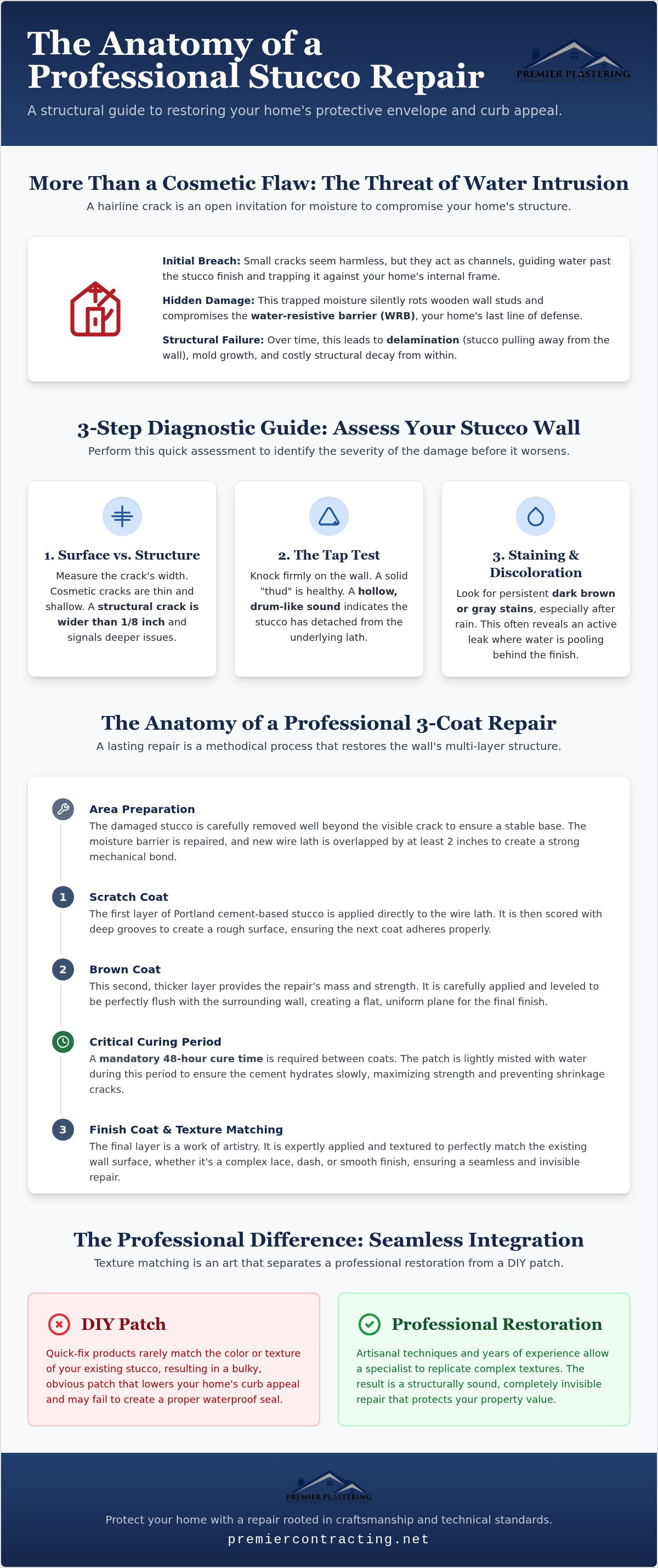
Damage rarely happens without a cause. Most issues arise from natural ground settling, poor original installation, or unmanaged moisture. While many homeowners ignore hairline cracks, these are often the first warning signs of significant structural stress. If you leave these openings alone, you risk delamination, which occurs when the heavy cement layers pull away from the wire lath.
The Hidden Danger of Water Intrusion
Water is a patient destroyer. It seeps through tiny fissures and gets trapped behind the stucco, where it silently rots your wooden wall studs. Your home's water-resistive barrier (WRB) acts as a secondary line of defense, but it isn't meant to handle large volumes of trapped liquid.
When moisture builds up, it creates hydrostatic pressure. This is the physical force exerted by standing water that eventually pushes through your home's internal seals. Without a clear path to drain, this moisture creates a breeding ground for mold and structural decay.
Diagnostic Guide: Assessing Your Wall
Identifying the severity of damage requires a methodical eye. You can perform a basic assessment before calling a specialist for stucco wall repair. Use these three markers to evaluate your exterior:
- Surface vs. Structure: Cosmetic cracks are typically thin and shallow. Structural cracks are deep, often wider than 1/8 inch, and may follow a diagonal pattern across the wall.
- The Tap Test: Knock firmly on several areas of the wall. A solid "thud" is healthy, but a hollow, drum-like sound indicates the stucco has separated from the metal lath.
- Stucco Discoloration: Look for dark brown or gray staining. Persistent stucco discoloration often reveals an active leak where water is pooling behind the finish.
Catching these issues early saves thousands in repair costs. A proactive approach ensures your home remains a safe, dry sanctuary for your family. We take pride in helping homeowners identify these hidden threats before they become catastrophic failures.
The Anatomy of a Professional Stucco Wall Repair
A lasting stucco wall repair is never a one-step process. Unlike the quick-fix products sold at big-box retailers, a professional restoration mirrors the original construction of your home. In Southern California, we rely on heavy-duty Portland cement mixtures to ensure your exterior stands up to the intense sun and occasional heavy rains.
The foundation of this system is the wire lath. This metal mesh acts as the skeleton for the wet plaster. If the lath isn't properly secured to the framing, the new patch will eventually sag or crack. Following stucco restoration best practices, we ensure every layer bonds mechanically to the one beneath it.
Preparing the Damaged Area
We begin with the "break-back" method. This involves removing damaged material several inches beyond the visible crack until we reach sound, well-adhered edges. It's the only way to ensure the new material has a stable base.
Once the area is clear, we inspect and patch the moisture barrier. We then overlap new wire mesh with the existing lath by at least two inches. This overlap prevents a weak "cold joint" from forming between the old and new sections. If you're unsure about the state of your home's exterior, our stucco services can help identify these hidden structural needs.
Applying the Restoration Layers
Success lies in the patience of the 3-coat system. Each layer serves a specific structural purpose and requires time to reach its full strength. We don't rush the process because the integrity of your home depends on the chemical bond of the cement.
- Step 1: The Scratch Coat. We apply this initial layer directly onto the lath. We then use a tool to "score" or scratch the surface, creating deep grooves that help the next layer stick.
- Step 2: The Brown Coat. This layer provides the bulk of the repair's mass. We use it to level the surface and ensure the patch is flush with the surrounding wall.
- Step 3: Curing and Hydration. We require a 48-hour curing time between these cementitious layers. During this period, we lightly mist the wall with water to prevent the cement from drying too quickly and becoming brittle.
Only after these layers have fully cured do we move to the final aesthetic coat. This methodical pace is what separates a Master Craftsman's work from a temporary patch that will fail in a few seasons. We treat every layer with the same level of care, even the ones you'll never see once the project is complete.
Professional Patching vs. DIY: Why Texture Matching Matters
The most common homeowner complaint after a repair is the visible "scab" patch. This occurs when a DIY attempt results in a bulky, mismatched area that ruins the home's curb appeal. High-quality stucco wall repair requires more than just filling a hole; it demands an artist’s eye to replicate the original wall's soul.
Ready-mix products from big-box stores rarely match the density or aggregate size of aged stucco. To achieve a seamless look, we use a "feathering" technique. This involves thinning the edges of the new patch and blending them into the existing wall to erase the visible transition line.
Replicating specific textures like dash, sand, or lace finishes takes years of disciplined practice. A Master Craftsman understands how the angle of the trowel and the moisture content of the mix affect the final look. We take personal accountability for every square inch, ensuring the repair is invisible to the naked eye.
The Challenge of Color Blending
Stucco changes over decades due to constant UV exposure and oxidation. These environmental factors alter the pigments, making a "standard" color match impossible. We custom-mix pigments on-site to achieve a 95% or better match with your existing finish.
We often recommend stucco fog coating instead of standard exterior painting. Fog coating is a cement-based finish that restores color while allowing the wall to breathe. Standard paint can trap moisture behind the surface, leading to the very rot you're trying to prevent.
Comparison: DIY Patch vs. Master Craftsman Restoration
Choosing between a weekend project and a professional restoration involves weighing immediate costs against long-term value. For those interested in local results, you can view Stucco Patching in Fullerton to see how we handle these aesthetic challenges.
| Feature | DIY Patch | Master Craftsman Restoration |
|---|---|---|
| Initial Cost | Low | Moderate Investment |
| Visibility | High (Visible "Scab") | Seamless / Invisible |
| Longevity | 1 to 3 Years | 20+ Year Life |
| Moisture Protection | Minimal | Watertight Seal |
Handling complex textures like Venetian plaster requires a high level of artisanal authority. We treat your home with the same care we would our own, refusing to cut corners on the finish. A truly professional stucco wall repair doesn't just fix a crack; it restores the original beauty and value of your property. For homeowners looking to further enhance this curb appeal, professional exterior illumination from Paradise Landscape Lighting provides a perfect example of how custom lighting can highlight a home’s architectural integrity.
Preventing Recurrent Damage: Maintenance and Protection
Completing a stucco wall repair is only half the battle. To protect your investment, you must implement a proactive maintenance strategy that addresses the root causes of moisture intrusion. For homes in Orange County and Anaheim Hills, we recommend a professional inspection cycle every 5 to 10 years. This prevents minor weathering from turning into a full-scale structural failure.
Moisture often enters through the "service penetrations" of your home. Check the caulking around your windows and doors every year; if it feels brittle or shows gaps, replace it immediately. Also, adjust your landscaping so that soil and sprinklers never touch the stucco line. Constant water saturation will eventually bypass even the best sealants and rot your internal frame.
The Role of the Weep Screed
A weep screed is a specialized metal flashing installed at the base of your exterior walls. It features a series of small "weep" holes designed to let moisture escape from the wall cavity. If water gets trapped behind the cement layers, the screed provides a critical exit point to prevent internal rot.
We frequently see these holes blocked by mulch, dirt, or thick layers of old paint. When the drainage path is obstructed, moisture builds up and attacks your home's wooden frame. Understanding these components is vital for long-term durability, as detailed in our guide on How Long Does Stucco Last?.
Sealing and Painting Your Stucco
Choosing the right finish is a technical decision, not just an aesthetic one. Standard acrylic paint is often too rigid for the natural expansion and contraction of your home. We prefer elastomeric coatings because they stretch to bridge small cracks while remaining watertight.
You must ensure the coating is breathable. Trapping moisture inside the wall with a non-porous sealer causes the finish to bubble and peel, leading to costly delamination. This technical approach to moisture management is also a hallmark of professional roof maintenance; for instance, Top Glaze Roofing Systems uses specialized materials and techniques to ensure a home's roof remains a breathable yet impervious barrier. Use this annual checklist to catch issues early:
If you notice these warning signs during your walk-through, don't wait for the next rainy season. Contact us for professional stucco patching and repair to secure your home's integrity and restore its original beauty.
Premier Plastering: Specialized Stucco Restoration in Fullerton
At Premier Plastering, we believe your home deserves the same level of care and accountability as our own. Led by Corey, our family-owned and operated business brings high-end artisanal authority to every stucco wall repair project in Orange County. We don't just patch holes; we restore the structural and aesthetic integrity of your property using techniques honed over decades of service.
Our team specializes in a wide range of exterior and interior finishes. Whether you need a standard residential stucco repair or a luxury Venetian plastering installation, we apply the same disciplined focus to every layer. We proudly serve homeowners across these Southern California communities:
- Fullerton
- Anaheim
- Orange
- Huntington Beach
Our Virtue-Based Approach
We distinguish ourselves through a commitment to ethical standards and transparency. Many contractors rush the job because the most critical steps, like the lath and moisture barrier, are eventually covered by cement. We do the right thing even when no one is watching, ensuring every hidden component meets the highest professional standards.
Our neighborly accessibility means you'll always have a direct line to a dedicated guide who listens to your concerns. We respect your home environment by maintaining a meticulous cleanup process at the end of every workday. For more tips on finding the right partner for your home, read our guide on Choosing a Stucco Contractor in Southern California.
Ready for a Seamless Restoration?
Temporary "scab" patches and DIY fixes only delay the inevitable and can lead to more expensive structural rot. It's time to stop the cycle of recurring damage and invest in a permanent solution that protects your home's value. We provide the technical expertise and artistic touch required for a truly seamless finish.
Contact us today to schedule a professional diagnostic assessment of your exterior. We'll identify the root cause of your damage and provide a clear, honest roadmap for your stucco wall repair. Visit Premier Plastering to request a quote and start your home's transformation.
Secure Your Home’s Future with Expert Restoration
Your home is likely your most significant investment. Protecting it requires a shift in perspective; viewing stucco wall repair as a vital structural restoration rather than a cosmetic chore. By adhering to the methodical 3-coat system and ensuring proper drainage through clear weep screeds, you defend your home's internal frame against the hidden threat of moisture rot.
You don't have to settle for mismatched patches or the constant worry of water damage. As a family-owned Fullerton business, we take personal accountability for every project. We specialize in seamless texture matching and have deep expertise in both traditional stucco and luxury Venetian plaster. We bring the artisanal precision needed to restore your home's curb appeal and the ethical standards you deserve from a trusted local partner.
It's time to restore your home's original beauty and structural integrity. Request a Professional Stucco Diagnostic from Corey at Premier Plastering today. We look forward to helping you protect your sanctuary for decades to come.
Frequently Asked Questions
Can I perform my own stucco wall repair for large holes?
Large holes require the structural restoration of the wire lath and a full 3-coat cement system, which is difficult to execute without professional tools. DIY "ready-mix" patches lack the structural mass and aggregate density needed for significant repairs. If you don't properly integrate the new wire mesh with the existing skeleton, the patch will eventually sag, crack, or allow water to bypass the moisture barrier.
How much does professional stucco repair cost in Orange County?
The investment for your project depends on several technical variables, including the depth of the damage and the complexity of the texture match. Factors such as the presence of internal wood rot or the need for specialized scaffolding also influence the final scope. We provide a detailed diagnostic assessment to identify the root cause of the failure before providing a transparent, fixed-price quote for the restoration.
How long does a professional stucco patch take to dry and cure?
A high-quality stucco wall repair follows a strict hydration schedule to ensure maximum strength. We require a minimum of 48 hours for moist-curing between the scratch and brown coats to prevent the cement from becoming brittle. While the surface may feel dry to the touch within hours, the cementitious layers continue to chemically harden for up to 28 days before reaching full structural maturity.
What is the difference between traditional and synthetic stucco repair?
Traditional stucco utilizes a rigid Portland cement base applied in three thick layers, while synthetic stucco, or EIFS, uses acrylic resins and integrated insulation boards. Repairing synthetic systems requires polymer-modified base coats and fiberglass mesh that differ significantly from traditional masonry. It's vital to identify your specific system correctly, as using the wrong materials will lead to immediate bonding failure and trapped moisture.
Why is my stucco cracking around the windows and doors?
Windows and doors are high-stress points where your home naturally settles and shifts over time. If the original installation lacked proper expansion joints or if the perimeter caulking has failed, moisture enters the gap and causes the framing to swell. This movement puts immense pressure on the rigid cement finish, resulting in diagonal "stress cracks" that signal a need for professional intervention to prevent internal rot.
How do you match the texture of old stucco walls?
We achieve a seamless match through a technique called feathering, where we thin the edges of the patch to blend into the existing wall. By custom-mixing the sand aggregate size and replicating the specific trowel pressure used on the original finish, we can disappear the repair. This artisanal approach is essential for complex lace, dash, or sand finishes that define your home's character.
Is it necessary to paint the whole house after a stucco repair?
You don't always need to paint the entire house if we use a fog coat to match the existing color pigments. However, if your exterior has significant UV fading or oxidation, a localized patch might remain slightly visible due to the age of the surrounding paint. In these cases, we recommend painting the affected wall from corner to corner to ensure a perfectly uniform and aesthetic result.
What happens if I ignore small hairline cracks in my stucco?
Ignoring small fissures is a major risk because they act as funnels for rainwater to reach your home's wooden framing. Over time, this moisture causes delamination, where the heavy cement layers physically pull away from the wire lath. What starts as a simple stucco wall repair can quickly escalate into a massive structural project if the internal studs begin to rot or develop mold growth.


