

A hairline crack in your exterior wall is rarely just a cosmetic blemish; it's often the first warning sign of a compromised moisture barrier. For homeowners in Fullerton or Anaheim Hills, these small openings can lead to significant structural anxiety. You might worry that a repair will result in a distracting, patchy eyesore that never quite matches your home's original finish. It's natural to feel a sense of unease about what might be hiding behind the surface, especially when quick, cheap fixes often fail within a single season.
True residential stucco repair is a structural restoration disguised as an aesthetic fix. We understand that your home is your most significant investment, and it deserves a process rooted in honesty and meticulous craftsmanship. This article provides a professional framework for lasting restoration, from identifying hidden water damage to achieving a seamless texture match that restores your home's integrity. We will explore how to protect your property under the 2025 California Building Standards Code while ensuring your moisture barrier remains intact. You'll discover how a disciplined approach to repair provides both peace of mind and an immediate boost to your home's long-term value.
Key Takeaways
- Learn why Southern California’s seismic activity creates structural stress and how to identify the early warning signs of a compromised portland cement envelope.
- Discover the technical 3-coat framework required to establish a "solid edge" and ensure your home's moisture barrier is fully restored.
- Master the art of the invisible finish by understanding how an artisan’s eye analyzes original trowel techniques for a perfect residential stucco repair.
- Protect your investment by learning to spot "Stucco Cowboy" red flags and why a specialized C-35 Lathing and Plastering license is non-negotiable.
- Understand the long-term value of partnering with a family-owned craftsman who prioritizes structural integrity over quick, surface-level fixes.
The Anatomy of Stucco Failure: Why Residential Repairs Are Essential
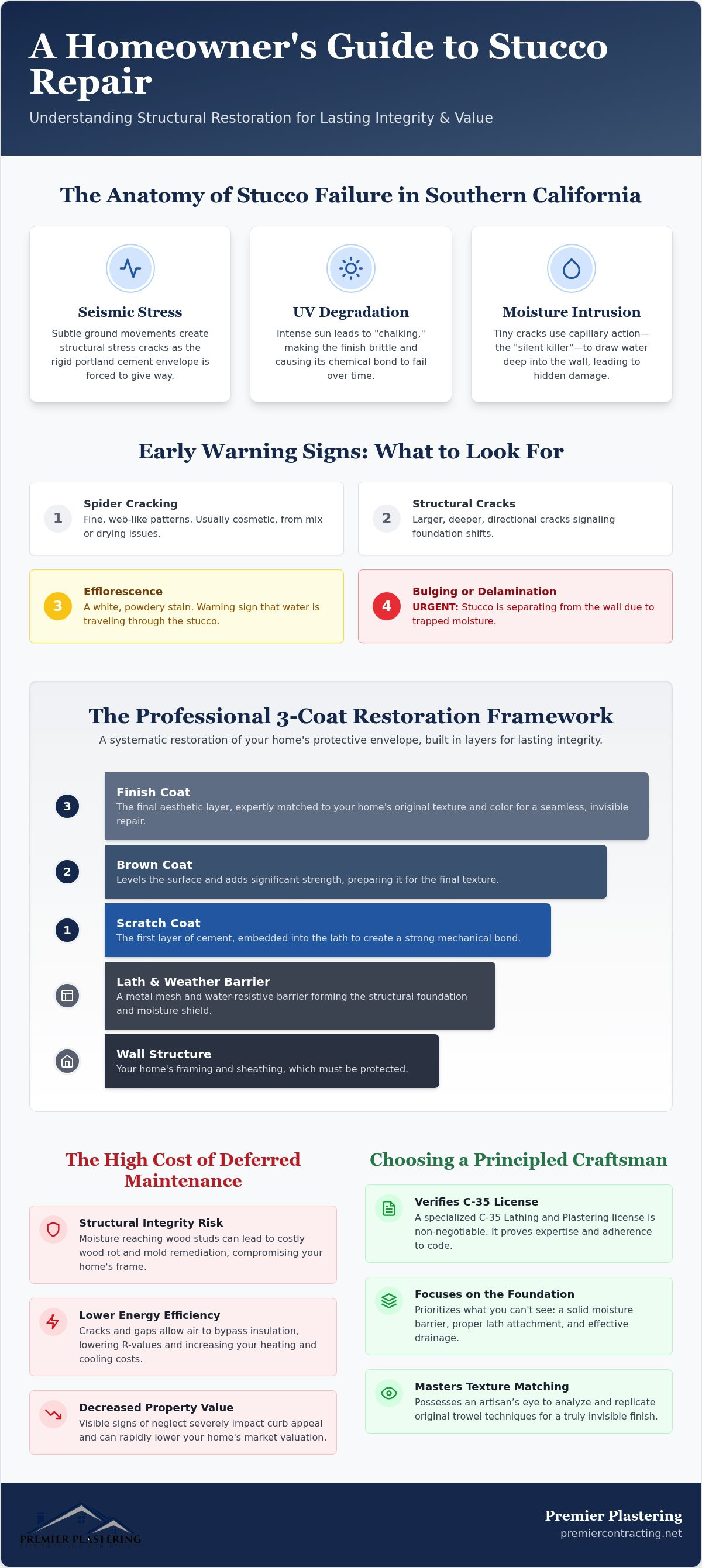
To understand why residential stucco repair is vital, you first have to view your home as a living structure. We define this service as the systematic restoration of the portland cement envelope, the protective skin that guards your framing. When we examine The Anatomy of Stucco, we see a complex layering system designed for durability. However, this system is inherently rigid. In Southern California, our homes face constant seismic shifts. These subtle movements create structural stress cracks that a less flexible material simply cannot absorb. When the ground moves, the rigid shell must give way, resulting in fractures that compromise the seal of your home.
The sun plays a significant role in this degradation process. In areas like Fullerton and Anaheim Hills, intense UV radiation leads to "chalking," a condition where the finish coat becomes brittle and loses its chemical bond. Once the surface integrity fails, the "silent killer" takes over. This is capillary action. Even a tiny hairline crack can act like a straw, drawing moisture deep into the substrate through surface tension. This moisture remains trapped, slowly eating away at the underlying structure while remaining invisible to the naked eye.
Identifying Common Stucco Ailments
Not every crack tells the same story. Spider cracking often appears as small, web-like patterns on the surface. These are usually cosmetic issues related to the original mix or rapid drying. Structural settlement cracks are different. They are typically larger, deeper, and follow a specific direction, signaling that the house has shifted on its foundation. You might also notice efflorescence, a white, powdery substance on your walls. This isn't just a stain; it's a warning that water is traveling through your stucco and bringing mineral salts to the surface. If you see bulging or delamination, the situation is urgent. This means moisture is already trapped behind the lath, causing the cement layers to separate and pull away from the wall.
The Consequences of Deferred Maintenance
Waiting to address these issues is a gamble with your home's equity. A simple patch can quickly escalate into a massive remediation project if moisture reaches the wooden studs. Once wood rot or mold sets in, the structural integrity of your home is at risk. Beyond the framing, compromised stucco impacts your energy efficiency. Cracks allow air to bypass your insulation, lowering your effective R-values and raising your monthly cooling costs. In competitive Orange County markets, curb appeal is a primary driver of value. A house showing signs of neglect will see a rapid decline in property valuation compared to a well-maintained neighbor. Investing in residential stucco repair now is a principled choice that protects both your family and your financial future.
To further improve your home’s climate control and mitigate the effects of solar heat gain, you can also visit Sun Guard Tint to explore how professional window films provide an extra layer of thermal protection for your property.
The Professional Restoration Framework: The 3-Coat Process
A successful residential stucco repair isn't just a surface-level fix; it's a complete restoration of your home's protective envelope. We approach every project through a professional restoration framework that honors the craft. This means we never take shortcuts that will be hidden by the final coat. Integrity in this trade starts with what the homeowner can't see. As a principled master craftsman, I believe that doing the work correctly when no one is watching is the only way to ensure lasting results.
Our first step involves assessing the damage and stripping back the failed cement until we reach a "solid edge." This ensures the new material bonds to a stable foundation rather than crumbling material. We then carefully inspect the weather-resistive barrier for any tears or signs of aging. If the moisture barrier is compromised, the best finish in the world won't stop wood rot from occurring behind the scenes. We also verify the condition of the weep screeds to ensure the entire system can breathe and drain properly.
The Foundation: Lath and Waterproofing
Securing the metal lath correctly is the most overlooked part of the process. We ensure the lath is fastened directly to the wall studs, not just the outer sheathing, to provide the structural grip necessary to hold the weight of the cement. A weep screed is a perforated metal flange that prevents water from pooling at the base of the wall. It's a critical component for drainage that many quick-fix contractors ignore. If your home in Villa Park shows signs of moisture at the foundation, professional stucco services can help identify if your drainage system is failing.
Scratch and Brown Coats: Building Structural Strength
The strength of a residential stucco repair lies in the scratch and brown coats. We mix our portland cement, lime, and sand to ratios specifically suited for the dry Southern California environment. The scratch coat is troweled on and deeply embedded into the metal lath to create a permanent mechanical bond. We then apply the brown coat, which builds the necessary thickness for fire protection and impact resistance. This layer must be perfectly level to ensure the final aesthetic finish looks seamless. We insist on a proper curing period between coats because cement needs time to hydrate and shrink. Rushing this process is the primary cause of bond failure, and we do it right the first time so you don't have to worry about it failing next year.
The Art of Seamless Stucco Texture Matching
Texture matching is the ultimate test of a contractor's skill. It's the primary reason many homeowners hesitate to schedule residential stucco repair. They've seen bad patches that look like permanent scars on a beautiful home. We approach this challenge as an artistic endeavor rather than a simple construction task. It requires what we call an "Artisan’s Eye" to analyze the original applicator's stroke. Every plasterer has a unique "handwriting" with their trowel. We look at the angle of the blade, the pressure applied, and the rhythm of the lace pattern to replicate the exact look of your home.
Matching aged stucco presents a unique challenge compared to newer applications. Over decades, the intense sun in Orange County and natural erosion soften the sharp edges of the original finish. A fresh application of the same texture will often look too "crisp" next to weathered walls. We use specific techniques to slightly soften the new material, ensuring it mimics the aged profile of your existing facade. To achieve a truly invisible repair, we often utilize fog coating. This is a cement-based finish that bonds into the pores of the stucco, allowing us to unify the color without the flat, plastic appearance of standard exterior paint. For those who prefer a complete color refresh after their repairs, the professional team at Brush Hour LLC offers expert painting services to ensure a uniform and durable finish.
Common Stucco Finish Types in Orange County
Different architectural styles across Yorba Linda and Fullerton require specialized techniques. We frequently work with these common textures:
- The Heavy Lace: This is a staple for Mediterranean-style homes. It requires a specific "knock-down" rhythm to match the random, flowing peaks and valleys.
- The Dash Finish: This involves achieving the exact pebble size and distribution. If the "bounce" of the material isn't matched correctly, the patch will stand out in direct sunlight.
- The Smooth Santa Barbara Finish: This is widely considered the most difficult texture to patch seamlessly. It's hand-troweled and shows every minor imperfection, requiring a steady hand and decades of experience.
Achieving the Invisible Patch
The secret to a successful blend lies in feathering. We don't just stop at the edge of the damage. Instead, we blend the new material into the old surface, gradually thinning it until there's no discernable line. Hydration also plays a critical role. If a patch dries too quickly in the heat of Anaheim Hills, the texture won't set correctly and the color will shift. We manage drying times meticulously to ensure the finish remains consistent across the entire wall. At Premier Plastering, we prioritize artisanal authority because we know a residential stucco repair is only successful if you can't see where our work began.
Choosing a Residential Stucco Contractor in Southern California
Selecting a partner for residential stucco repair is a decision that impacts your home's health for decades. It's not merely about finding the lowest bid; it's about finding a steward for your property's longevity. In California, a specialized C-35 Lathing and Plastering license is the gold standard for this work. This isn't just a piece of paper. It's a verification that the contractor understands the complex interplay of lath, moisture barriers, and cement layers. Hiring a generalist or a painter for structural stucco work often leads to disappointment when the "repair" fails within a year.
You should be wary of "Stucco Cowboys" who offer quick, cheap fixes. A common red flag is a contractor who suggests filling cracks with caulk. Stucco is a cementitious product that requires a compatible material to bond. Caulk is a temporary band-aid that will eventually peel and trap moisture. Another warning sign is the use of 1-coat systems for a patch that clearly requires the 3-coat depth we've discussed. These shortcuts compromise the fire rating and impact resistance of your walls. Local expertise also matters. A contractor familiar with the specific building codes in Fullerton and Yorba Linda ensures your project meets the 2025 California Building Standards Code requirements.
A master craftsman respects the environment they work in. This means maintaining a clean job site and protecting your landscaping. We understand that your home isn't just a construction zone; it's your sanctuary. If you value a disciplined, honest approach to your home's exterior, we invite you to reach out for professional stucco patching and repair services.
Key Questions to Ask Your Contractor
Before signing a contract, ask these clarifying questions to gauge their commitment to quality:
- "Will you be replacing the underlying moisture barrier if we find damage behind the lath?"
- "How do you ensure the color and texture match the existing aged finish of my home?"
- "Do you use traditional portland cement for the base coats or are you relying on synthetic fillers?"
Maintenance Tips for Long-Lasting Stucco
Once your residential stucco repair is complete, a small amount of maintenance goes a long way. We recommend a gentle washdown every six months. This removes accumulated salts and pollutants that can slowly eat away at the finish coat. You should also manage your landscape irrigation carefully. Ensure your sprinklers don't spray directly onto the stucco base, as constant water saturation can lead to efflorescence or delamination. Finally, perform an annual inspection. Catching a hairline crack early allows for a simple, affordable fix before it evolves into a structural failure.
The Premier Plastering Difference: Principled Craftsmanship
Corey leads Premier Plastering with a simple but profound philosophy: every home in Huntington or Villa Park receives the same meticulous care he would give his own property. As a family-owned business, we don't answer to a distant corporate office. We answer to you, our neighbor. This direct accountability means that our personal pride is tied to the longevity and beauty of every residential stucco repair we complete. We believe in virtue-based service, which means choosing the right way over the easy way, even when the structural details will eventually be hidden behind layers of cement.
Our background in luxury Venetian plastering provides a unique advantage for your home's restoration. This high-end artisanal expertise requires a level of precision and material knowledge that most standard contractors simply haven't mastered. We apply that same master craftsman’s eye to your exterior walls, ensuring that every patch is not just structurally sound but aesthetically perfect. It's this commitment to ethical standards and enduring quality that ensures your home remains protected against the elements for years to come. We don't believe in hidden costs or temporary fixes; we believe in providing a long-term investment in your home's protection.
Serving the Heart of Orange County
Our roots run deep in the local communities of Fullerton, Yorba Linda, and the surrounding areas. We've spent years restoring the diverse architectural fabric of Orange County. Our portfolio includes everything from historic Fullerton bungalows that require traditional cement techniques to modern Anaheim Hills estates that demand sleek, contemporary finishes. These local projects serve as living case studies of our dedication to craftsmanship. Neighbors trust us because we've proven our reliability on the streets where they live, work, and raise their families.
Your Next Steps to a Restored Home
The path to a fully restored home begins with a comprehensive diagnostic assessment. During your consultation with Corey, you'll receive a transparent evaluation of your home's exterior health. We don't just look at surface cracks. We investigate the underlying causes of failure to ensure your residential stucco repair addresses the root of the problem. This methodical approach provides you with the peace of mind that comes from knowing your home is in the hands of a disciplined professional. We listen to your concerns and provide clear, honest guidance on the best restoration strategy for your specific property.
Protect your investment-Contact Premier Plastering for a professional stucco assessment today.
Investing in Your Home's Lasting Protection
Your home is more than just a structure; it's a sanctuary that deserves meticulous care. We've explored how a disciplined 3-coat process and an artisan's eye for texture matching are essential for a truly successful restoration. By prioritizing structural integrity over quick, cheap fixes, you ensure your property remains resilient against Southern California's unique environmental stresses. A seamless repair doesn't just improve aesthetics. It provides the peace of mind that your moisture barrier is intact and your investment is secure for the long term.
Choosing the right partner for residential stucco repair means looking for honesty paired with technical mastery. Premier Plastering is a family-owned and operated business led by Corey. We take deep personal pride in every project we touch, specializing in seamless texture matching that makes previous damage completely disappear. We've spent years serving our neighbors in Orange, Fullerton, and Yorba Linda with a commitment to ethical standards and quiet excellence. Your home is ready for its next chapter, and we're here to guide you through the restoration process with clarity and respect.
Request a Professional Stucco Repair Estimate
Frequently Asked Questions
How much does residential stucco repair typically cost in Orange County?
The cost of restoration depends on several variables, including the depth of the cracks, the total square footage of the damage, and the complexity of the texture match. Factors like the accessibility of the wall and the condition of the underlying moisture barrier also play a role. We recommend a professional diagnostic assessment to provide an accurate scope of work tailored to your home's specific architectural needs.
Can I just paint over a stucco crack to fix it?
Painting over a crack is a cosmetic mask that fails to address the underlying structural compromise. Standard exterior paint doesn't have the elastomeric properties to seal a moving crack, and it won't stop moisture from entering the substrate through capillary action. Professional residential stucco repair requires cutting back to a solid edge and applying new cement layers to restore the protective envelope of your home.
How long does a professional stucco repair project take to complete?
A typical restoration project takes between three to five days of active labor, though the total duration depends on the necessary curing times. We insist on allowing the scratch and brown coats to hydrate properly before applying the final finish. This measured pace prevents shrinkage cracks and ensures a permanent bond, making the repair a long-term solution rather than a temporary fix.
What is the difference between traditional cement stucco and synthetic EIFS?
Traditional stucco is a breathable, three-coat system made of portland cement, lime, and sand applied over metal lath. Synthetic EIFS, or Exterior Insulation and Finish Systems, uses foam boards and a thin acrylic coating. While synthetic finishes offer flexibility, traditional cement stucco provides superior impact resistance and fire protection, which is vital for homes in the Southern California climate.
Why is my stucco peeling or flaking off in large chunks?
Peeling or flaking, known as delamination, usually signals that moisture has compromised the bond between the cement layers or the underlying lath. This often happens when water enters through failed window flashing or roof leaks, causing the metal lath to rust and expand. As the metal swells, it pushes the stucco away from the wall, requiring a systematic removal of the failed material.
Is it possible to match the color of my 20-year-old stucco exactly?
We can achieve a seamless match on aged surfaces by utilizing fog coating or custom-tinted finish coats that account for years of sun exposure. Our artisanal approach involves analyzing the current patina of your home and using feathering techniques to blend the new material into the old. This ensures the transition is invisible to the naked eye, even on decades-old finishes.
Does stucco repair require a building permit in Fullerton or Anaheim?
Minor cosmetic patching typically doesn't require a permit, but significant structural residential stucco repair or a full re-stucco often does under the 2025 California Building Standards Code. Requirements vary by municipality, especially regarding moisture barriers and energy efficiency. It's best to consult with your local building department in Fullerton or Anaheim to ensure your project remains compliant with current safety regulations.
What happens if water has already reached the wood framing behind my stucco?
If moisture has penetrated the wood framing, the priority shifts to structural stabilization and preventing mold growth. We must remove the damaged sections to inspect the studs for rot or decay. Any compromised wood must be repaired or replaced before we install a new weather-resistive barrier. Addressing these hidden issues immediately is the only way to protect your home's long-term structural integrity.


