

Choosing the wrong texture for your home's exterior isn't just an aesthetic mistake; it's a structural gamble that can lead to moisture traps and unsightly cracks. When you explore various stucco finish types, you're selecting the protective barrier that keeps the Southern California heat from compromising your walls. It's about finding that perfect balance between architectural beauty and long-term durability.
You've likely noticed how some homes maintain a flawless, timeless look while others nearby show every repair like a jagged scar. It's natural to feel concerned about whether a new finish will match your existing style or if it will fail under the intense sun. We believe your home is a reflection of your standards, and you deserve a finish that honors its integrity and character.
This guide will clarify the technical differences between traditional cement and modern synthetic finishes so you can make an informed decision for your property. We'll break down the most popular textures, compare material longevity, and show you how to ensure a seamless match during any restoration project.
Key Takeaways
- Identify the structural differences between traditional cement and synthetic acrylic systems to ensure your exterior is both breathable and moisture-resistant.
- Evaluate the durability of various stucco finish types to find a solution that resists cracking in the intense Southern California heat.
- Choose the right texture for your architectural style, from the sleek elegance of a Santa Barbara smooth finish to the practical hiding power of a sand float.
- Discover how premium Venetian plastering uses lime-based putty and marble dust to achieve a luminous, stone-like appearance that adds timeless value.
The Core Composition: Traditional Cement vs. Synthetic Acrylic Stucco
Selecting the right stucco finish types depends primarily on your home's existing substrate and your desired maintenance level. In Southern California, our homes endure constant UV radiation and subtle seismic movements. These environmental factors make material composition a structural decision rather than just a cosmetic one. You need a surface that balances rigid protection with the ability to handle local climate stress.
Traditional Three-Coat Systems
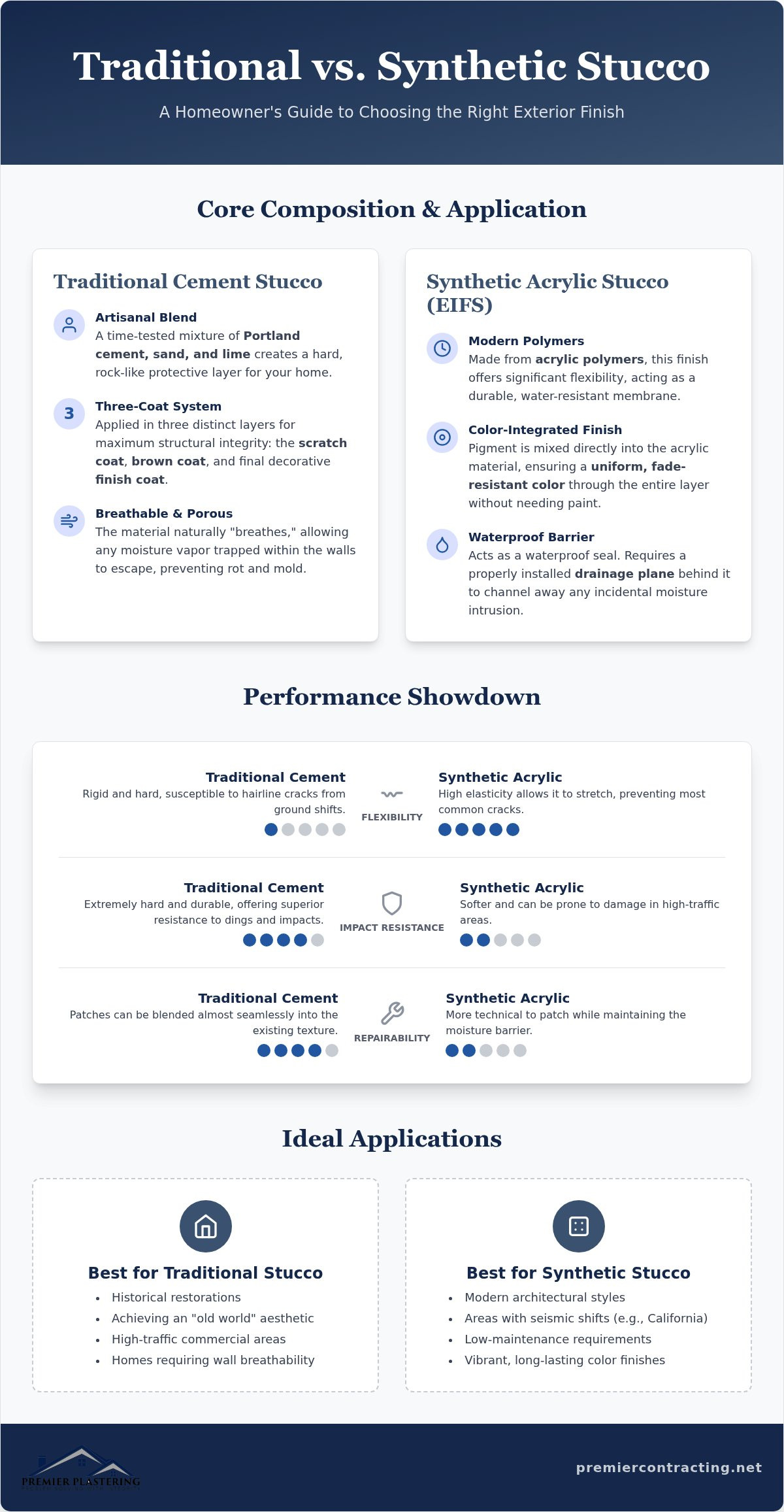
Traditional stucco uses a classic blend of lime, sand, and Portland cement to create a breathable, rock-hard exterior. This artisanal method relies on a methodical three-stage process to ensure the wall remains structural and sound:
- Scratch Coat: This initial base layer anchors the entire system to the wire lath.
- Brown Coat: A secondary application used to level the surface and create a flat plane.
- Finish Coat: The final decorative layer where the master craftsman applies the specific texture.
This system provides a natural, "old world" feel that synthetic products cannot fully replicate. It's a breathable material, which means it allows internal moisture to escape. This is a critical feature for preserving the integrity of older Orange County homes with masonry foundations.
The Rise of Acrylic Finishes
Synthetic stucco, often referred to as EIFS, utilizes acrylic polymers to provide high levels of elasticity. This flexibility is a significant advantage in Fullerton and surrounding areas where ground shifts are common. Because the material can stretch, it effectively prevents hairline cracks that often plague more rigid, cement-only systems.
Acrylic finishes are also color-integrated. The pigment is mixed directly into the material at the factory, ensuring a uniform hue throughout the entire thickness of the coat. This eliminates the need for immediate painting and helps the exterior resist fading under the intense Anaheim sun. It's a durable, low-maintenance solution for modern architectural styles. If you are interested in how these principles of durability and aesthetics apply to other parts of your home's exterior, learn more about Acadiana Patios & Construction to explore comprehensive renovation options.
Comparing Performance: Traditional Stucco vs. Synthetic Stucco
The performance of different stucco finish types ultimately comes down to how they handle physical and environmental stress. Traditional cement stucco provides superior impact resistance, which makes it the better choice for high-traffic areas where walls might endure physical contact. In contrast, synthetic systems offer the high elasticity needed to withstand Southern California's seismic shifts without cracking. According to the Stucco Manufacturers Association, selecting the right system requires balancing these mechanical properties with your specific home site.
Traditional finishes are often preferred for their superior repairability. A stucco crack repair specialist can typically blend new cementitious patches into existing textures more seamlessly than with acrylics. While synthetic stucco is highly flexible, its specialized drainage plane requirements make patching a more technical process that requires meticulous attention to detail to maintain the moisture barrier.
Maintenance and Longevity Factors
Determining how long does stucco last involves looking at how well the material manages moisture over decades. Traditional stucco is naturally porous and "breathes," allowing internal vapor to escape through the wall. Synthetic systems are essentially waterproof but must include a dedicated drainage plane to prevent trapped moisture. You should watch for signs like bubbling or efflorescence, as these indicate the system's integrity is compromised and needs professional care.
Cost vs. Value for Orange County Homeowners
For historical Fullerton restorations, traditional stucco remains the gold standard because it preserves architectural authenticity. However, many Orange County homeowners view the higher initial cost of synthetic finishes as a wise investment in long-term crack prevention. If you're weighing these options for your property, our team can provide a detailed assessment through our stucco services to ensure your investment is protected.
Popular Stucco Textures: From Smooth to Rustic Finishes
The visual character of your home depends on the specific stucco finish types you choose. These textures do more than just look good; they interact with light and shadow to define your property's architectural depth. Craftsmen apply these finishes by hand, making each wall a unique piece of functional art that protects your structure.
- Smooth (Santa Barbara) Finish: This high-end, sleek look is perfect for modern and Spanish-revival homes. It requires expert trowel work to achieve a refined surface that mimics traditional lime plaster.
- Sand (Float) Finish: A versatile, grainy texture that hides minor imperfections effectively. You can choose different sand grain sizes to achieve a fine, medium, or coarse appearance.
- Dash Finish: This sprayed-on texture ranges from fine to heavy and creates a very uniform appearance. It's a durable choice that resists the elements while providing a consistent look across large surfaces.
- Cat Face Finish: This features a smooth surface with strategic "peep-through" inclusions for a rustic aesthetic. It captures the weathered charm of Mediterranean villas by revealing the rougher base coat in specific areas.
This level of artistry is universal in high-end construction; for example, a stucadoor amsterdam utilizes similar hand-applied techniques to achieve the flawless thin plaster finishes (dunpleister) that define modern European interiors.
Architectural Style Matching
Mediterranean and Spanish-revival homes thrive with smooth or cat face finishes that highlight their curved lines. Contemporary designs demand the sharp, clean edges of a Santa Barbara finish. Your texture choice significantly impacts the exterior stucco restoration process, as certain finishes require more meticulous surface preparation to ensure a flawless bond.
Texture Matching in Repairs
Achieving a seamless stucco repair is exceptionally difficult with hand-applied textures. Every craftsman has a unique "handwriting" with the trowel, meaning a patch can easily stand out if the technique doesn't match. We specialize in replicating these complex patterns to ensure your restoration looks original and untouched. If you're ready to restore your home's unique character, our team provides the expert stucco services you need to get the job done right.
Premium Options: Venetian Plaster and Artisanal Finishes
While standard stucco finish types offer excellent protection, homeowners seeking a luxury aesthetic often turn to artisanal materials. Venetian plastering in Fullerton utilizes a specialized lime-based putty mixed with genuine marble dust. This combination creates a polished, stone-like surface that standard cement cannot replicate. It's the ideal choice for those who value tradition and high-end craftsmanship.
We achieve this luminous look through a multi-layer burnishing process. Each thin coat is compressed with a stainless steel trowel to create depth and light reflection. Compared to standard finishes, Italian plaster finishes offer a luxury appeal perfect for grand entryways or architectural accent walls. You should choose these artisanal options when your goal is to create a focal point that adds significant property value.
The Durability of Venetian Plaster
It's a common myth that polished finishes are fragile. The high lime content actually makes these surfaces naturally resistant to mold and mildew. Once cured, the plaster undergoes a carbonization process that turns it back into stone, resulting in exceptional surface hardness. Maintenance for exterior high-gloss plaster involves a gentle wash every six months and a fresh coat of protective wax or sealer every few years to maintain the sheen.
Choosing the Right Master Craftsman
Applying these materials requires more than basic masonry skills. You need a specialized stucco contractor Southern California who understands the chemistry of lime-based products. This technical knowledge ensures the finish won't peel or discolor under the intense sun. Contact Premier Plastering today to evaluate your home's current finish and discuss a high-end restoration or upgrade for your property.
Secure Your Home’s Architectural Legacy
Selecting the right stucco finish types is a vital step in preserving your home's structural health and aesthetic value. You've seen how traditional cement provides a breathable, rock-hard barrier, while modern synthetic finishes offer the flexibility to resist cracking during ground shifts. Every texture, from the refined Santa Barbara smooth to the intricate Cat Face, serves a specific purpose in your home's defense against the elements.
We take immense pride in our seamless texture matching and high-end Venetian plastering for neighbors throughout Fullerton and surrounding Orange County cities. Our approach combines technical precision with a sincere commitment to honest, artisanal workmanship. Restore your home's curb appeal with a master craftsman; contact Premier Plastering for a stucco evaluation today. We look forward to helping you choose a finish that provides lasting beauty and peace of mind for your family.
Frequently Asked Questions
What is the most durable stucco finish for Southern California?
Traditional cement stucco is often the most durable choice due to its rigid strength and high impact resistance. However; synthetic acrylic finishes are better for homes in areas like Anaheim Hills where seismic movement is common. The best choice depends on whether your priority is protection against physical damage or the prevention of hairline cracks caused by frequent ground shifts.
Can you change the texture of your stucco during a repair?
You can change the texture during a restoration; but it usually requires a full re-skim of the entire wall section to ensure a uniform appearance. Patching a different texture into a small area creates a visible scar that looks unprofessional. We often help Fullerton homeowners transition from dated heavy lace textures to modern smooth finishes during comprehensive exterior updates to improve curb appeal.
Is synthetic stucco more expensive than traditional cement stucco?
Synthetic acrylic finishes generally carry a higher material cost than traditional cement-based mixtures. This reflects the advanced polymer technology that provides superior color consistency and flexibility. While the initial investment is higher; many property owners in Yorba Linda find the long-term value in reduced maintenance and better resistance to the fading caused by intense California UV exposure over several decades.
What is the difference between a smooth finish and a Santa Barbara finish?
A Santa Barbara finish is a specific style of smooth finish that uses a fine-grade sand to achieve a slightly irregular; old-world plaster look. While a standard smooth finish aims for a perfectly flat and modern surface; the Santa Barbara style embraces subtle trowel marks and organic depth. It remains a popular choice for Spanish-revival homes in historic Fullerton neighborhoods due to its artisanal character.
How do I know if my stucco is traditional or synthetic?
You can often identify the material by performing a simple tap test or looking at the crack patterns. Traditional cement stucco feels like rock and sounds solid when tapped; while synthetic systems may sound slightly hollow or feel softer. Additionally; traditional stucco finish types typically show straight cracks; whereas synthetic finishes are more likely to exhibit bubbling if moisture is trapped behind the acrylic layer.


