

Choosing the right Venetian plaster textures has more to do with your home's natural light than the color on the swatch. You've likely felt the frustration of staring at a small sample and wondering if a high-gloss finish will feel too cold or if a rustic stone grain will be impossible to clean. It's a common concern for homeowners who want luxury without the maintenance headache.
I'll help you identify the specific artisanal finishes that complement your architecture while standing up to daily life. You'll learn the practical differences between smooth and coarse grains so you can choose with confidence. We'll also explore why certain textures thrive in the unique golden hour lighting found in Fullerton and Anaheim Hills homes.
This guide provides a clear path from polished mirror sheens to rugged, earthy finishes. We'll compare durability for high-traffic areas and look at how grain size impacts your room's final mood. By the end, you'll know exactly which texture brings your vision to life.
Key Takeaways
- Learn how marble grain size dictates the finish, allowing you to choose between a high-gloss mirror effect or a rugged, rustic stone look.
- Use the Room Utility Rule to select the ideal sheen for your space, ensuring high-traffic areas remain both durable and beautiful.
- Discover how specific Venetian plaster textures can effectively mask existing wall damage while providing a timeless, artisanal aesthetic.
- Understand the professional 3-coat application process and the burnishing techniques used by master craftsmen to create a natural, deep-seated glow.
The Core Categories of Venetian Plaster Textures
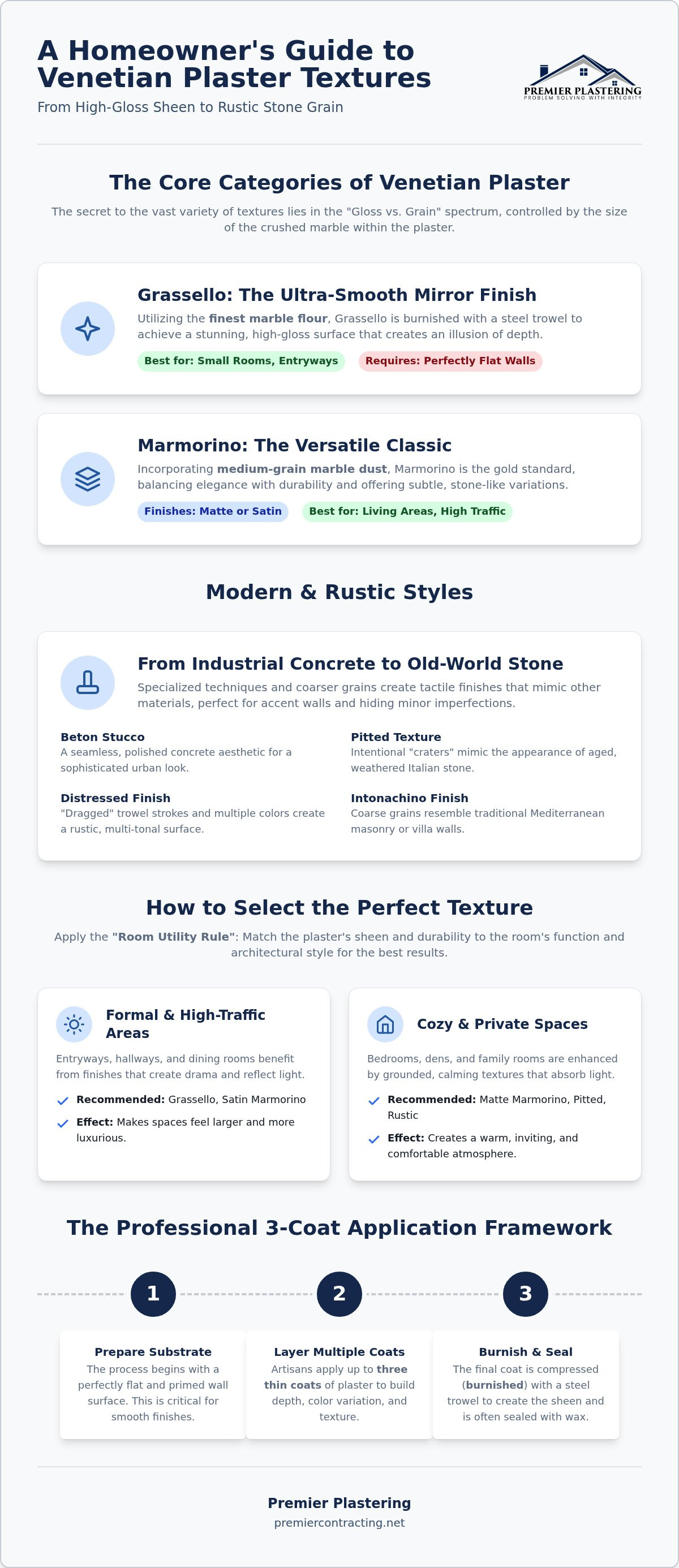
Authentic Venetian plaster is more than just a decorative coating; it's a multi-layered finish composed of natural lime putty and crushed marble. The secret to the vast variety of Venetian plaster textures lies in the "Gloss vs. Grain" spectrum. By adjusting the size of the marble dust within the mixture, we can create everything from a matte stone surface to a high-gloss shine. Because this is a hand-applied artisanal finish, no two walls ever look exactly identical. It's a living material that reflects the unique strokes of the craftsman's hand. For a deeper look at the materials we use, check out What is Venetian Plaster?
Grassello: The Ultra-Smooth Mirror Finish
Grassello uses the finest marble flour available to produce a high-gloss, reflective surface. It's often called "spatula stuccato" because of how we burnish it with a stainless steel trowel to achieve a mirror-like sheen. This texture creates an incredible illusion of depth, making it a perfect choice for smaller powder rooms or narrow entryways. It pulls light into the space and makes the walls appear to recede. Note that Grassello requires a perfectly flat substrate; any bump or dip in the wall will show through the reflective finish.
Marmorino: The Versatile Classic
Marmorino incorporates medium-grain marble dust, which gives the wall a more substantial, tactile feel. It's the "gold standard" for luxury wall finishes in Fullerton because it balances elegance with durability. You'll see subtle tonal variations and "movement" across the surface that mimic natural stone.
- Matte Finish: Provides a soft, organic look that diffuses harsh light.
- Satin Sheen: Offers a slight glow that highlights the plaster's internal layers.
This versatility makes it ideal for large living areas where you want texture without overwhelming the room's architecture.
Modern Styles: From Industrial Concrete to Rustic Stone
Modern design often demands a tactile "feel" that standard paint simply cannot replicate. We use specialized Venetian plaster textures to bridge the gap between historic elegance and urban grit. This versatility allows us to move beyond simple sheens into finishes that mimic heavy stone or raw industrial materials.
- Beton Stucco: A technique used to achieve a polished concrete aesthetic that is seamless and sophisticated.
- Pitted Texture: This style features intentional small "craters" that mimic the look of aged, weathered Italian stone.
- Distressed Finish: We use multiple colors and "dragged" trowel strokes to create a rustic, multi-tonal appearance.
These techniques require a steady hand and a deep understanding of how the plaster dries. By manipulating the trowel at different angles, we can control the frequency of the "pits" or the depth of the distressed grain. This ensures your wall looks like a natural piece of architecture rather than a manufactured product. This same commitment to architectural integrity is evident when you explore Natural Stone Retaining Walls to enhance your landscape.
To create an urban, concrete look, we utilize gray-toned Marmorino applied in specific, purposeful layers. This finish provides exceptional durability, making it a favorite for high-impact accent walls and modern fireplace surrounds. The strength of these materials is why many homeowners choose similar textures for modern exterior stucco restoration projects in Southern California. It's a clean, seamless look that stays cool to the touch.
Rustic Stone and Old-World Charm
The Intonachino finish uses a coarser marble grain to resemble traditional Mediterranean masonry or old-world villa walls. We often finish these rustic surfaces with natural waxes to enhance the "earthy" feel and provide a soft, protective glow. These heavier textures are also superior for hiding minor wall imperfections or previous repairs that might show through a smoother finish. If you want to see how these grains look under your home's unique lighting, our team can provide physical samples to guide your decision.
How to Select the Perfect Texture for Your Space
Selecting Venetian plaster textures requires balancing room function with architectural integrity. Use the "Room Utility Rule": high-gloss finishes like Grassello belong in formal dining rooms or entryways where they can reflect light and create drama. In contrast, matte or pitted textures create a grounded, cozy feel for bedrooms and private dens.
A major concern for homeowners is existing wall damage. High-gloss finishes are unforgiving and will highlight every wave or dip in the substrate. If your walls have minor imperfections, choosing a coarser, rustic finish is the more practical path. This approach mirrors the logic used for specific stucco finish types, where texture masks repairs while adding character.
The Southern California Light Factor
In cities like Anaheim and Orange, the intense Southern California sun can turn a high-gloss wall into a source of uncomfortable glare. For rooms with large floor-to-ceiling windows, we recommend matte or satin textures to diffuse the light. To capture the famous SoCal "Golden Hour," we can incorporate metallic additives that catch the low evening sun without creating a blinding reflection.
Matching Texture to Architectural Style
Different home styles in Orange County require specific grain profiles to look authentic. For Spanish Colonial homes, coarse, pitted textures pair perfectly with heavy timber beams and terracotta tiles. Mid-Century Modern designs benefit from low-sheen, seamless Marmorino to maintain clean lines. Contemporary spaces often utilize polished concrete textures for a minimalist, industrial vibe that complements steel and glass. If you're struggling to visualize how these grains will interact with your specific floor plan, contact our team for a professional texture consultation.
The Professional Framework for Layering and Longevity
Achieving durable Venetian plaster textures requires a methodical three-coat application process. We start with a base coat to establish uniform suction across the substrate. This is followed by a texture coat where the specific grain is defined, and finally, a burnishing coat to seal the surface.
Burnishing is the secret to creating a deep "inner glow" without relying on synthetic topcoats. By applying firm pressure with a stainless steel trowel, we compress the marble particles into a dense, stone-like surface. This artisanal technique is why hiring a professional stucco contractor is vital for a high-end result.
Ensuring a Seamless Bond
Substrate preparation is the most critical step for the longevity of your finish. We pay special attention to transitions between previous stucco crack repairs and new plaster applications. Using a dedicated quartz primer prevents delamination and ensures the plaster bonds permanently to the wall structure.
Maintenance of Artisanal Textures
Caring for your walls depends on the specific finish we've applied. Polished surfaces generally repel dust and stay clean with a simple damp microfiber cloth. Matte or pitted textures require a softer touch to avoid creating accidental "shiny spots" during cleaning.
- Minor Scuffs: You can often buff these out with a clean, dry cloth without ruining the tonal movement of the plaster.
- Wax Re-application: We recommend a professional wax refresh every 5 to 7 years to maintain the clarity of the texture.
- Sealing: High-traffic areas benefit from breathable sealers that protect the lime from oils and moisture while allowing the wall to "breathe."
This disciplined approach ensures your investment remains a centerpiece of your home for decades. Whether you choose a mirror sheen or a rustic grain, proper layering is the foundation of artisanal quality.
Elevate Your Home with Artisanal Texture
Choosing the right Venetian plaster textures is about more than just aesthetics; it's about selecting a finish that respects your home's architecture and the unique Southern California light. Whether you prefer the mirror-like reflection of Grassello or the rugged, earthy feel of a pitted stone finish, the key lies in the disciplined application of natural lime and marble. We've served Orange County for over a decade, bringing this level of craftsmanship to both luxury interiors and durable exterior stucco projects.
Our team takes pride in every trowel stroke, ensuring your walls possess a depth and durability that standard paint simply can't match. We invite you to View our Venetian Plaster Gallery and Request a Consultation to see how these artisanal finishes can elevate your space. Let's work together to create a timeless environment that reflects your personal style and stands the test of time.
Frequently Asked Questions
Can Venetian plaster textures be applied over existing drywall?
Yes, you can apply it over drywall, but the preparation is the most important part. The surface must be taped and sanded to a Level 5 finish to avoid showing joints. We then apply a specialized quartz primer to ensure a permanent bond. This process prevents the plaster from delamination and ensures your home's new finish stays beautiful for many years.
Is Venetian plaster more durable than standard interior paint?
Venetian plaster is far more durable than standard paint. While paint is a thin layer that fades or peels after 5 years, plaster is a breathable stone coating that can last up to 40 years. It hardens over time through a natural carbonation process. This makes it resistant to impacts and much easier to maintain in high-traffic areas of your home.
How do I choose between a polished and a matte texture?
Base your choice on the room's purpose and your home's natural light. Polished Venetian plaster textures create a formal, high-energy atmosphere that works well in entryways. Matte textures offer a grounded, organic feel for bedrooms or private offices. If your walls have minor surface damage, a matte or pitted grain is much better at hiding those imperfections than a reflective finish.
Can you use Venetian plaster textures in bathrooms or kitchens?
Yes, these textures are excellent for kitchens and bathrooms because lime is naturally mold-resistant. We apply a protective wax or sealer to help the surface shed water and resist stains. While it's perfect for backsplashes and bathroom walls, it shouldn't be used inside a shower stall with direct water contact. It provides a seamless, artisanal alternative to traditional tile in these spaces, though many homeowners choose to complement plaster walls with custom surfaces from Richmond Stone for their cabinetry and countertops.
Special lighting isn't necessary, but the plaster's appearance will change as the sun moves. Direct Southern California light highlights the tonal depth and hand-applied strokes in the grain. We often recommend matte finishes for rooms with floor-to-ceiling windows to avoid uncomfortable glare. In darker hallways, a polished finish can help reflect available light and make the space feel much larger.


