

With seamless stucco repair, filling a crack or hole is only part of the job. The patch also needs to suit the surrounding stucco’s texture, profile, and finish, while the cause and extent of the damage guide the repair approach.
A patch can be structurally sound and still stand out because its color, texture, or edges differ from the weathered wall around it. A careful assessment helps distinguish surface damage from damage that extends farther into the stucco. Premier Plastering repairs stucco on residential and commercial properties, with attention to restoring both the damaged area and its appearance. Here’s what to look for during assessment, patching, and finish matching, and why the right approach depends on the condition of the whole area.
Key Takeaways
- A natural-looking patch depends on repairing the damage and matching its relationship to the surrounding stucco.
- Assessment, preparation, rebuilding, and finish matching each help shape the final appearance.
- Weathering and previous repairs can affect how closely a new patch blends with an older wall.
- Premier Plastering assesses residential and commercial stucco damage in Southern California, including in Fullerton and nearby communities.
What Makes Seamless Stucco Repair Look Natural?
Seamless stucco repair fixes the damaged area and makes its texture and finish relate naturally to the surrounding wall. The goal is not simply to fill a crack or hole. The patch also needs to follow the nearby surface profile and meet the existing finish without a sharp, obvious boundary. For a basic overview of the material, see What is stucco.
A natural result depends on two parts of the work: repairing the damage and blending the appearance. A patch may look well matched but fail to address damage beneath the surface. A sound repair can also remain visible if its texture, profile, or edges differ from the wall.
Why Can a Stucco Patch Stand Out?
Texture casts shadows across a stucco wall. If a patch is smoother, rougher, or shaped differently from the surrounding surface, changing light can make it easier to spot. A hard edge can outline the repair, while a different finish can make the patch look separate from the wall.
Stucco may also vary across the surrounding wall. Weathering and earlier repairs can change the texture or finish, so one nearby spot may not be a reliable match for the whole area.
A Natural Blend Is More Than a Color Match
Color matters, but surface profile and finish also affect how a patch looks. Matching the visible texture helps the repair sit more naturally beside the existing stucco. Careful edge work helps avoid a distinct transition line.
Appearance is only one part of the job. If an assessment finds damage beyond the surface, that concern needs attention as part of the repair, rather than being covered by a cosmetic match. The approach should account for both the damaged area and the surrounding stucco.
How Professionals Build a Stucco Patch That Blends
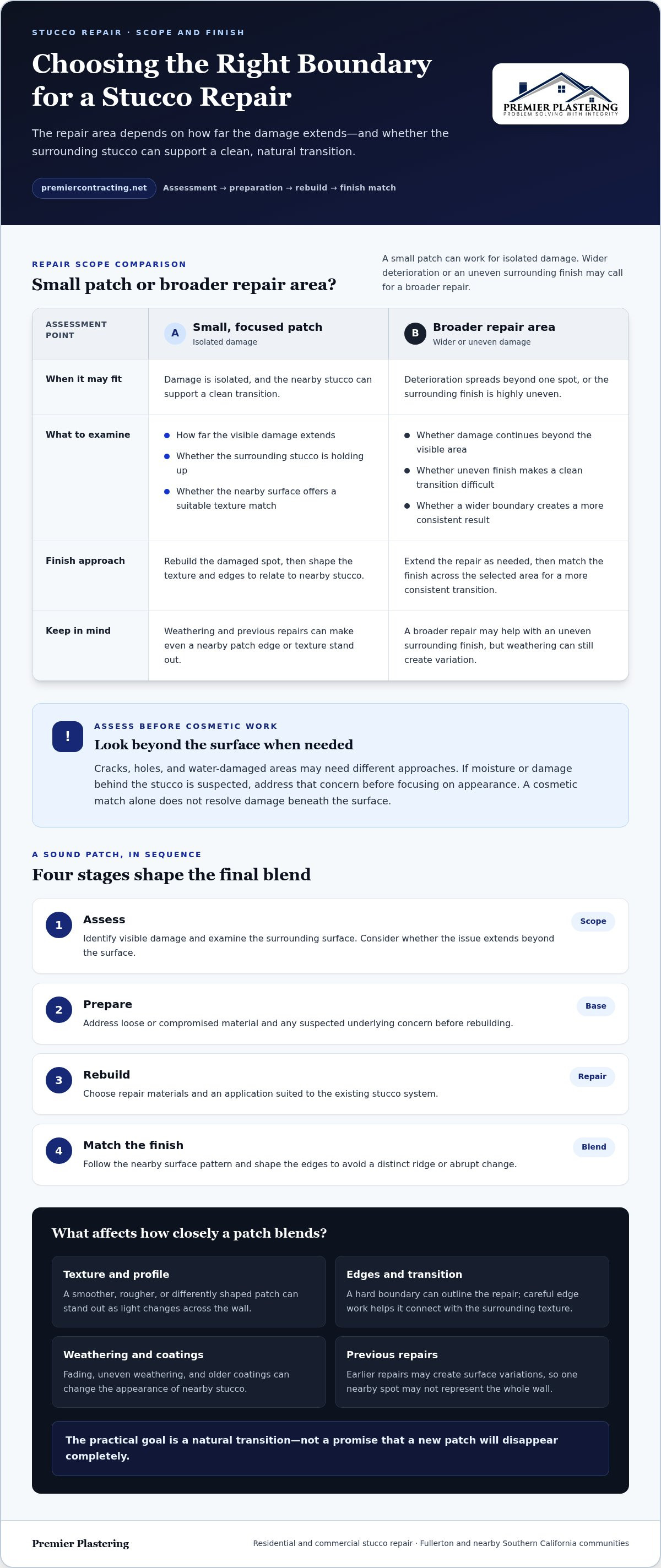
A well-blended patch follows a clear sequence: assess the damage, prepare the area, rebuild the patch, and match the finish. Each step supports the next. Moving straight to texture work can leave loose material, underlying damage, or a weak transition beneath the finished surface.
Assessment and Preparation Set the Repair Up
The repair scope depends on what is damaged and how the surrounding stucco is holding up. Cracks, holes, and water-damaged areas may require different approaches. If moisture or damage behind the stucco is suspected, address that concern before focusing on cosmetic blending.
Next, prepare the affected area so compromised material does not remain beneath the patch. The repair materials and application should suit the existing stucco system. This provides a sound base for rebuilding and helps the new surface meet the surrounding stucco cleanly.
Texture Matching Happens at the Finish
Once the patch is rebuilt, shape the finish to relate to the nearby stucco. A professional compares the surface pattern around the repair and adjusts the application to follow it. The material, application technique, and condition of the existing wall all influence how closely the finish blends.
Pay close attention to the edges. A hard boundary can outline the repair, so the transition should connect naturally with the surrounding texture instead of leaving a distinct ridge or abrupt change. Texture matching improves the visual relationship, although weathering or older repairs may still create variation.
- Assess: Identify the visible damage and examine the surrounding surface.
- Prepare: Address loose or compromised material and any suspected underlying concern.
- Rebuild: Use an approach suited to the existing stucco system.
- Match: Shape the finish and edges to follow the surrounding texture.
This sequence is central to seamless stucco repair. Premier Plastering provides professional stucco patching and repair for property owners in Fullerton and nearby Southern California communities, addressing the damaged surface and its finish.
How to Reduce Visible Differences After Stucco Repair
Texture matching can help a patch blend, but an older wall may not look identical across every area. Weathering, previous coatings, and past repairs can change the surface over time. The practical goal is a natural transition, not a promise that the repair will disappear completely.
Before work begins, note the texture and finish around the damage. Photos from nearby and farther away can document the surface pattern, visible wear, and finish variations. These references help guide the match and show whether the repair boundary should follow the damage or extend into a more uniform area.
What Can Make a Repaired Area Look Different?
A fresh patch may stand out if the nearby stucco has faded, weathered unevenly, or been covered with an older coating. Cracks can also point to damage beyond the visible line. If cracks are part of the problem, read this guide to stucco crack repair.
Address suspected moisture-related damage before judging the finish. If water has affected material beneath the surface, repairing only what is visible may leave the cause unresolved. Include the surrounding area in the repair assessment.
When Should the Repair Area Be Broader?
The right boundary depends on how far the damage extends and whether the surrounding stucco can support a clean transition. A small patch may suit isolated damage. Spreading deterioration or a highly uneven surrounding finish may call for a broader repair area to create a more consistent result.
For a wider view of repair scope, see this guide to exterior stucco restoration. For seamless stucco repair that considers both the damage and the finish, explore professional stucco repair with Premier Plastering.
Seamless Stucco Repair in Southern California: What to Expect
A thoughtful repair starts with the damage, the condition of the surrounding stucco, and the finish you want to preserve. That assessment helps define the scope, whether the work can focus on one damaged area or needs to cover a broader section for a more consistent result.
From Damage Assessment to a Finished Surface
Premier Plastering provides stucco patching and repair for residential and commercial properties, including cracks, holes, and water-damaged areas. The repair considers both the affected stucco and the nearby texture, so the work addresses the damage while taking the finished appearance into account.
Clear communication helps you understand the surface condition, the proposed repair area, and the finish-matching approach. Careful workmanship and respect for the property matter throughout the job. If the assessment points to moisture-related damage, the repair plan should address it rather than focus only on the surface appearance.
Get Help With Stucco Repair Near Fullerton
Premier Plastering serves Fullerton and nearby communities, including Orange, Huntington, Yorba Linda, Anaheim, Santa Ana, Villa Park, and Anaheim Hills. For more local repair context, read this guide to stucco patching in Fullerton.
Before moving ahead, focus on three decision points: what caused the damage, how far it extends, and how the repair can relate to the existing finish. These factors shape a practical approach to seamless stucco repair without promising that aged stucco will match perfectly. For stucco patching and repair in the area, get help with your stucco repair from Premier Plastering.
Choose a Repair That Respects the Whole Wall
A natural-looking repair starts with more than a surface touch-up. Seamless stucco repair pairs attention to the visible finish with a sound repair approach shaped by the damage and the condition of the surrounding stucco.
Texture, patch edges, and the wall’s age all affect how closely a repaired area blends. Matching techniques can reduce visible differences, but weathering and past repairs may mean the surface will not look exactly uniform. Addressing the cause of damage matters as much as refining the finish.
Premier Plastering provides stucco patching and repair for residential and commercial properties in Fullerton and nearby communities, including Orange, Huntington, Yorba Linda, Anaheim, Santa Ana, Villa Park, and Anaheim Hills. Talk with Premier Plastering about your stucco repair and take the next step toward a clear repair plan.
Careful assessment and skilled workmanship help you move forward with a repair that considers both the wall and its appearance.
Frequently Asked Questions
What does seamless stucco repair mean?
Seamless stucco repair fixes damaged stucco while shaping the patch to relate naturally to the surrounding surface. The work considers the repair’s soundness along with its texture, finish, and edges. A well-matched patch can blend more smoothly into the wall, though an aged or previously coated surface may still show some variation.
Can a stucco patch be completely invisible?
A stucco patch can be made less noticeable, but a completely invisible repair cannot be promised. Weathering, older coatings, previous patches, and differences in the existing texture can affect the finished appearance. Careful assessment and finish matching help reduce contrast. A broader repair may be considered if the surrounding surface is uneven.
How do professionals match stucco texture?
Professionals compare the texture and finish around the damaged area, then shape the repaired surface to follow that pattern. The result depends on materials and application methods suited to the existing stucco, as well as careful work at the patch edges. A natural blend also needs a sound base, not just a similar-looking top layer.
Does stucco repair include fixing water damage?
Yes. Premier Plastering’s stucco patching and repair addresses water-damaged areas, along with cracks and holes. The approach depends on the condition and scope of the damage. If moisture may have affected material beneath the visible surface, consider that concern before focusing on texture matching, so the work addresses more than appearance alone.
How long does seamless stucco repair take?
The time required depends on the size and condition of the damaged area, the repair scope, and the finish work involved. A small patch and a repair involving water-damaged stucco may require different steps. Curing also affects the timeline. An assessment helps clarify the work involved, but no single timeframe fits every repair.


