

What if a dark stain on your stucco is only the visible sign of moisture trapped behind it? A quick patch may cover the mark, but lasting stucco water damage repair starts with assessing the damage and considering how moisture may be reaching the wall.
If you’re unsure whether staining, bubbling, or a crack points to a larger issue, get the area assessed before approving a repair. The right scope depends on what is damaged and whether moisture may still be getting in.
This guide explains how to assess common warning signs, compare repair options, and choose a contractor. Premier Plastering provides stucco patching and repair, including work on water-damaged surfaces, for residential and commercial properties. The family-owned business serves Fullerton and nearby communities.
Key Takeaways
- Stains, soft spots, or bubbling can signal a moisture concern, but they do not show the full extent of damage on their own.
- Effective stucco water damage repair addresses the affected surface and considers how moisture may be getting in.
- Compare contractors by their stucco repair experience, how clearly they explain the work, and whether they discuss possible moisture entry.
- When contacting Premier Plastering, describe where the damage appears, what has changed, and any history you know about the issue.
Stucco Water Damage Repair: What the Signs Can, and Cannot, Tell You
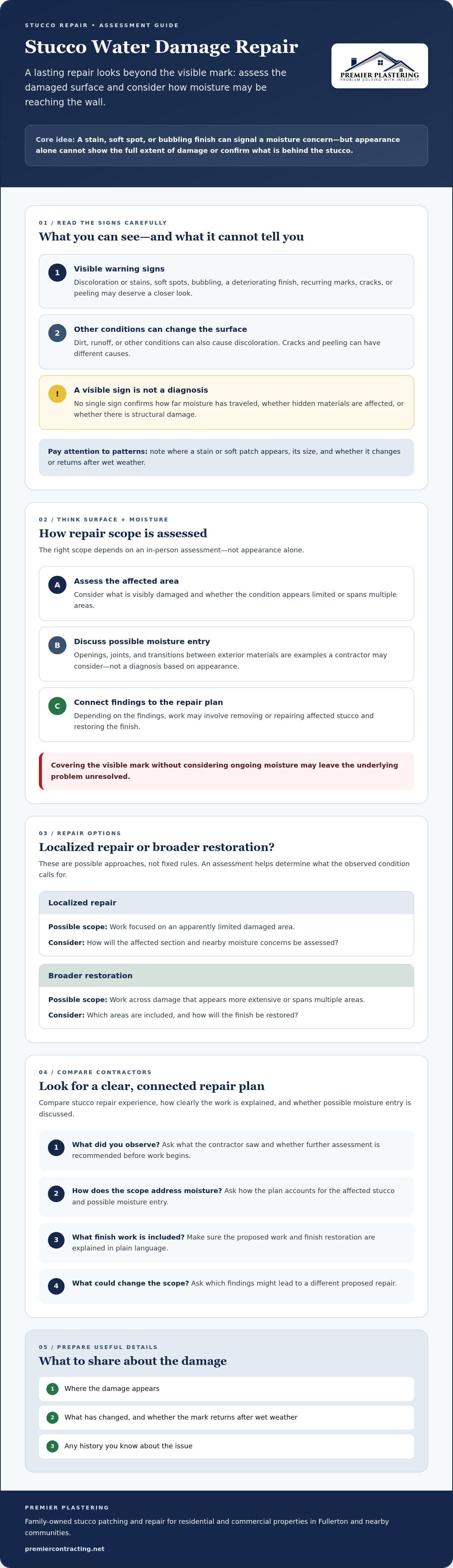
Water-damaged stucco is stucco affected by moisture that has reached or remained in the exterior wall system. A stain, soft area, or bubbling finish can point to a concern, but no single visible sign confirms how far moisture has traveled or whether hidden materials are affected. Sound stucco water damage repair starts with assessing the conditions, not guessing from a photo.
Stucco is a durable exterior finish made from materials applied in layers; the Stucco overview offers background on its composition and use. Water-related damage should be considered in context because cracks or peeling can have different causes and do not establish that moisture is behind the finish.
When a stain or soft patch deserves a closer look
Discoloration may be related to moisture, but dirt, runoff, or other conditions can also change the surface. Note the location and size of a stain or soft patch, and whether it changes after wet weather. Bubbling, a deteriorating finish, or a recurring mark deserves attention, but none alone proves structural damage.
If the same area becomes damp or discolored again, avoid treating the visible mark as the whole problem. A patch or new finish may not last if moisture continues to reach the wall.
Why the moisture source matters in Southern California homes
Openings, joints, and transitions between exterior materials are examples of places a contractor may consider when investigating moisture entry. These are possibilities to discuss, not a diagnosis based on appearance alone. Share where the change appears, when you first noticed it, and whether it returns after wet weather.
A sound stucco repair plan considers possible moisture entry as well as surface damage. This helps tie the repair scope to the assessment, rather than simply covering a visible symptom.
How Stucco Water Damage Repair Addresses the Surface and Moisture
A lasting repair considers both the visible stucco and possible moisture entry. The contractor assesses the affected area, discusses potential entry points, and explains the work that may be needed. Depending on the findings, the repair may involve removing or repairing affected stucco and restoring the finish. The right scope depends on an in-person assessment, not appearance alone.
Repairing the finish without considering ongoing moisture may leave the underlying problem unresolved. The International Masonry Institute’s overview of stucco restoration provides additional context on damage and repair approaches.
Localized stucco patch or broader restoration?
A localized patch may suit damage that appears limited. If visible damage spans multiple areas or appears more extensive, a broader restoration may be considered. These are possible approaches, not fixed rules. An assessment helps determine what the observed condition calls for.
| Repair approach | Possible scope | What to consider |
|---|---|---|
| Localized repair | Work focused on an apparently limited damaged area | Ask how the affected section and nearby moisture concerns will be assessed. |
| Broader restoration | Work across damage that appears more extensive or spans multiple areas | Ask which areas are included and how the finish will be restored. |
Questions to ask about the proposed repair
Before approving stucco water damage repair, ask the contractor to explain the proposed scope in plain language. You should understand what they observed, what they plan to address, and how they considered possible moisture entry.
- How will you assess the affected area and consider where moisture may be entering?
- What work is included, and how will you address the finish?
- What findings could change the proposed scope?
Repair methods vary with the conditions, so ask for a clear explanation rather than assuming every project follows the same steps. If you’re considering a repair for your Anaheim property, you can learn about stucco patching and repair.
Choosing Stucco Water Damage Repair in Fullerton and Orange County
When comparing stucco water damage repair contractors, look at how they assess the issue and explain the proposed work, not just the surface appearance. A clear proposal should connect the observed damage, possible moisture entry, and finish work so you can understand what is included.
Four questions to ask before approving stucco repair
- What did you observe? Ask what the contractor saw and whether they recommend further assessment before work begins.
- How does the scope address moisture? Ask how the plan accounts for the affected stucco and possible moisture entry.
- What finish work is included? Discuss how the repaired area’s texture and appearance will relate to the surrounding stucco.
- What could change the scope? Ask which findings or conditions might lead to a different repair plan.
Check local service fit and repair experience
Choose a contractor with relevant stucco repair experience, and ask whether they handle work for properties like yours, whether residential or commercial. A qualified professional should explain the proposed scope in plain language and answer questions without suggesting that every project uses the same method.
Premier Plastering serves Fullerton and nearby communities, including Orange, Huntington, Yorba Linda, Anaheim, Santa Ana, Villa Park, and Anaheim Hills. When you inquire, describe your property and the damage so the project scope can be discussed directly.
Use these questions to compare proposals carefully. Discuss your stucco repair needs with Premier Plastering and share what you’ve observed at your property.
What to Expect When You Contact Premier Plastering About Water-Damaged Stucco
Premier Plastering provides stucco patching and repair for residential and commercial properties, including water-damaged surfaces. For a stucco water damage repair inquiry, sharing clear details helps start a focused conversation. The repair scope should follow an assessment of the affected area, not a diagnosis based only on a brief description or photo.
Information to prepare for a repair inquiry
Before contacting a contractor, note where the damage appears and when you first noticed it. Describe what has changed over time, such as a stain returning or the finish becoming soft or bubbled. Stick to what you’ve observed instead of guessing at the cause.
If photos are requested, share clear views of the affected area and its surroundings. Images can help explain what you’re seeing, but they may not show the complete condition or establish the right repair scope.
A local stucco repair conversation, without guesswork
Premier Plastering is a family-owned business led by Corey, focused on stucco repair and careful workmanship. Ask how the assessment will guide the proposed work, what the repair includes, and how the finish will be addressed.
The company serves Fullerton, Orange, Huntington, Yorba Linda, Anaheim, Santa Ana, Villa Park, and Anaheim Hills. Share your location and project details when you get in touch.
Have water-damaged stucco in Fullerton or a nearby community? Contact Premier Plastering to discuss what you’ve observed and ask about stucco patching and repair for your property.
Take the Next Step Toward a Lasting Stucco Repair
Water stains, bubbling, or soft stucco can signal a moisture concern, but the visible surface doesn’t tell the whole story. Effective stucco water damage repair starts with an assessment, considers possible moisture entry, and sets a repair scope that fits the observed damage.
Before choosing a contractor, ask how they assessed the area, what work the proposal includes, and how they’ll address the finish. Clear answers help you understand the plan and make a confident decision.
Premier Plastering repairs stucco damage, including water-damaged surfaces, for residential and commercial properties. The family-owned business serves Fullerton, Orange, Huntington, Yorba Linda, Anaheim, Santa Ana, Villa Park, and Anaheim Hills. Discuss your project directly to determine the appropriate scope.
Contact Premier Plastering to discuss your stucco repair and share what you’ve noticed. A clear conversation is a practical first step toward restoring your exterior.
Frequently Asked Questions
Is water-damaged stucco repairable?
Often, yes. The right repair depends on what an assessment finds. A limited area may suit a localized patch, while damage across multiple areas may call for broader restoration. Ask how the proposed stucco water damage repair considers possible moisture entry as well as the visible finish. A photograph can help explain what you see, but it can’t confirm the full repair scope.
What causes water damage behind stucco?
Moisture can enter through openings, joints, or transitions, but the cause varies from one property to another. A stain or soft patch doesn’t identify the entry point by itself. A qualified stucco professional can assess the visible condition and discuss possible sources. Don’t assume the stucco surface is the only part of the wall assembly that may need attention. For instance, upper-level leaks or roof-to-wall intersections often allow water in, which is why exterior specialists like Advanced Roofing highlight inspecting roof transitions and flashing to prevent moisture from getting behind the siding.
A patch may improve the damaged surface, but it may not address why moisture reached that area. If water continues to enter, surface work alone may leave the underlying concern unresolved. Before approving a repair, ask how the contractor will consider potential moisture entry and what the proposed work covers. The scope should reflect an assessment, not an assumption that a patch solves every cause.
How do I choose a contractor for stucco water damage repair in Orange County?
Choose a contractor with relevant stucco repair experience who can explain the observed damage and proposed scope clearly. Ask how the assessment considers possible moisture entry, what finish work is included, and whether your community is served. If you’re in Orange, Huntington, Yorba Linda, Fullerton, Anaheim, Santa Ana, Villa Park, or Anaheim Hills, contact Premier Plastering to discuss your project and compare clear explanations, not promises alone.


